How to Choose the Right Ceramic Fiber Blanket for Industrial Insulation
Choosing the right ceramic fiber blanket is essential for efficient high-temperature insulation, reliable furnace operation and effective heat-loss control. For industrial furnace manufacturers, refractory contractors, insulation distributors and bulk buyers, the selection process should consider temperature rating, density, thickness, dimensions and operating conditions.
Mindelun supplies ceramic fiber insulation materials for industrial furnaces, kilns, heat treatment equipment and other high-temperature applications. This guide explains how to select a suitable ceramic fiber blanket for your project and what to check before placing a bulk order.
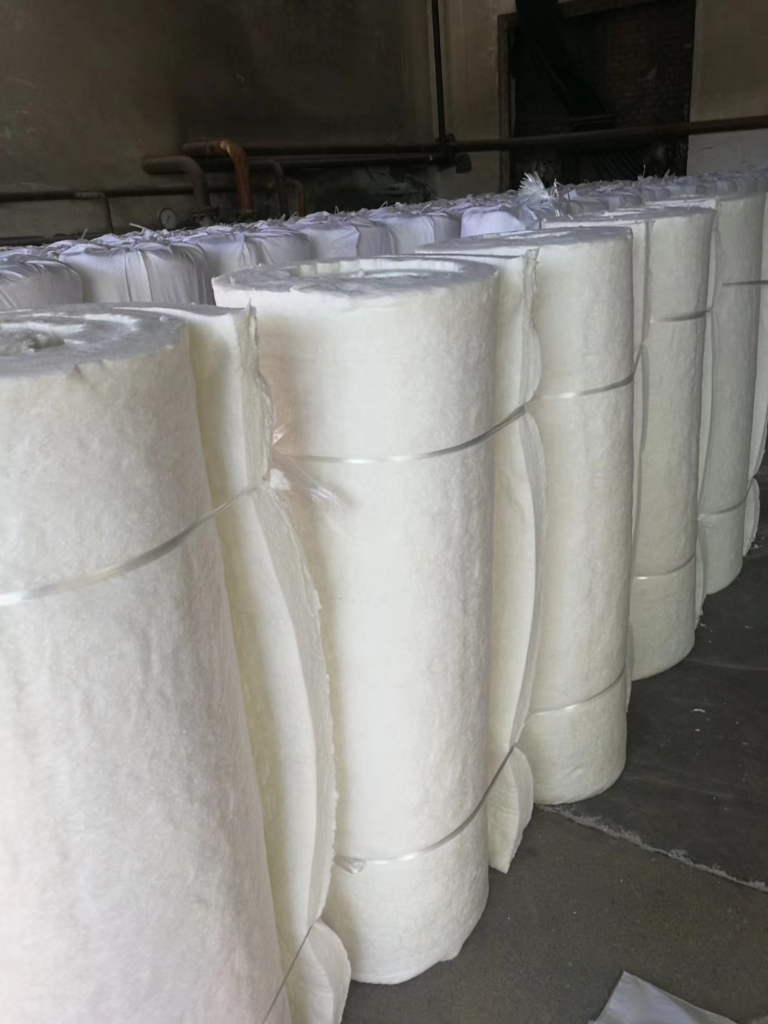
1. What Is a Ceramic Fiber Blanket?
A ceramic fiber blanket is a lightweight, flexible refractory insulation material made from high-temperature ceramic fibers. It is commonly used in industrial thermal insulation systems because of its low thermal mass, flexibility and ability to conform to different lining structures.
Depending on the product grade and installation design, ceramic fiber insulation blankets can help reduce heat loss and support efficient heating and cooling cycles.
Common applications include:
- Industrial furnace and kiln linings
- Heat treatment equipment
- Boiler and high-temperature duct insulation
- Petrochemical heating equipment
- Furnace doors and expansion joints
- Backup insulation behind refractory linings
For complete insulation system requirements, explore our industrial furnace insulation solutions.
2. Choose the Correct Ceramic Fiber Blanket Temperature Rating
Temperature classification is one of the first specifications to consider when purchasing a high-temperature ceramic fiber blanket. Common grades include 1050°C and 1260°C, while higher-temperature fiber products are available for specific applications.
Classification temperature should not be treated as the recommended continuous operating temperature. Actual service suitability depends on the fiber composition, operating atmosphere, thermal cycling, installation method and manufacturer’s technical recommendations.
Before selecting a ceramic fiber blanket for furnace insulation, confirm:
- Normal operating temperature and peak temperature
- Continuous or intermittent operating conditions
- Furnace atmosphere and potential chemical exposure
- Required insulation thickness and lining structure
- Expected service life and maintenance requirements
Selecting the appropriate temperature grade helps balance thermal performance, service reliability and material cost.
3. How Do Density and Thickness Affect Insulation Selection?
The density and thickness of a ceramic fiber blanket influence its installed weight, handling characteristics and thermal performance.
Common ceramic fiber blanket densities include 64, 96 and 128 kg/m³. Standard thicknesses often include 25 mm and 50 mm, although other specifications may be available depending on the product grade and manufacturing capability.
When comparing ceramic fiber blanket specifications, consider the following factors:
Density: Different densities provide different combinations of handling characteristics, fiber structure and thermal performance. Density alone does not determine insulation quality.
Thickness: The required thickness depends on the target heat-loss level, equipment temperature, available installation space and overall insulation design.
Thermal conductivity: Compare technical data at relevant mean temperatures rather than relying only on classification temperature.
Permanent linear shrinkage: This property is important when evaluating dimensional stability under elevated temperatures.
For industrial buyers, reviewing these technical parameters together provides a more meaningful comparison than comparing price per roll alone.
4. Common Ceramic Fiber Blanket Sizes and Specifications
Ceramic fiber blankets are supplied in rolls, with dimensions varying according to thickness, density and product grade.
A common 1260°C ceramic fiber blanket specification is:
| 1 | Item | Unit | Test Result | Test Result | Test Result | Test Result | Test Result | Test Result |
| 2 | Grade | / | Common/COM | Standard/ST | High purity/HP | High alumina/HA | Zirconia-alumina/ZA | Zirconia/HZ |
| 3 | Specification temp | (℃) | 1050 | 1260 | 1260 | 1360 | 1400 | 1450 |
| 4 | Working temperature | (℃) | 800 | 1050 | 1100 | 1150 | 1200 | 1350 |
| 5 | Color | / | White | Pure White | Pure White | Pure White | Pure White | Pure White |
| 6 | Density | (kg/m3) | 128/96/80/64±15 | 128/96/80/64±15 | 128/96/80±15 | 160/128±15 | 160/128/96±15 | 160/128/96±15 |
| 7 | Permanent shrinkage Rate of liner (24h, density 128kg/m₃) | (%) | -4 | -3 | -3 | -3 | -3 | -3 |
| (1000℃) | (1100℃) | (1000℃) | (1250℃) | (1250℃) | (1350℃) | |||
| 8 | Thermal conductivity of each heat surface(density 128kg/m₃) | (W/m.k) | 0.09(400℃) | 0.09(400℃) | 0.09(400℃) | 0.12(600℃) | 0.132(600℃) | 0.16(800℃) |
| 0.16(800℃) | 0.16(800℃) | 0.16(800℃) 0.20(1000℃) |
0.20(1000℃) | 0.22(1000℃) | 0.22(1000℃) | |||
| 9 | Compression strength (density 128kg/m₃) | (Mpa) | ≧0.04 | ≧0.04 | ≧0.04 | ≧0.06 | ≧0.06 | ≧0.06 |
| 10 | Al₂O₃ | (%) | ≧40 | ≧42 | ≧47 | ≧45 | ≧45 | ≧40 |
| 11 | Al₂O₃+SiO2₂ | (%) | 96 | 97 | 99 | 99 | – | – |
| 12 | Al₂O₃+SiO₂+ZrO₂ | (%) | – | – | – | – | 99 | 99 |
| 13 | ZrO₂ | (%) | – | – | – | – | 5–7 | 15–17 |
| 14 | Fe₂O₃ | (%) | <1.2 | <1.0 | <0.2 | <0.2 | <0.2 | <0.2 |
| 15 | Na₂O+K₂O | (%) | <0.5 | <0.5 | <0.2 | <0.2 | <0.2 | <0.2 |
| 16 | Thickness | (mm) | 12.5/20/25/38/50 | |||||
| 17 | Width | (mm) | 610/1220 | |||||
| 18 | Length | (mm) | 3600/7200/14400 | |||||
These are common reference specifications, not a guarantee that every combination is available. Confirm actual product availability and technical data before ordering.
For projects requiring special dimensions, discuss custom ceramic fiber blanket sizes with the supplier. Providing complete specifications at the quotation stage can reduce unnecessary clarification and help improve purchasing efficiency.
View our ceramic fiber blanket products for more information.
5. Ceramic Fiber Blanket Applications in Industrial Insulation
Industrial Furnaces and Heat Treatment Equipment
Ceramic fiber blankets are used in suitable furnace lining systems to reduce heat transfer and thermal mass. The correct material grade and installation structure should be selected according to the furnace design and operating conditions.
Kilns and Ceramic Processing Equipment
For kilns and other thermal processing equipment, flexible ceramic fiber insulation can be used in selected lining and backup insulation applications.
Boilers, Pipes and High-Temperature Ducts
Ceramic fiber blankets can be applied to suitable hot surfaces and equipment to help control heat loss. Protective cladding or other mechanical protection may be necessary depending on the operating environment.
Refractory Contractors and Insulation Distributors
Distributors and contractors often require consistent specifications, reliable packaging and repeat-order support. A supplier that can clearly confirm product grade, dimensions, documentation and delivery terms can help simplify procurement for ongoing projects.
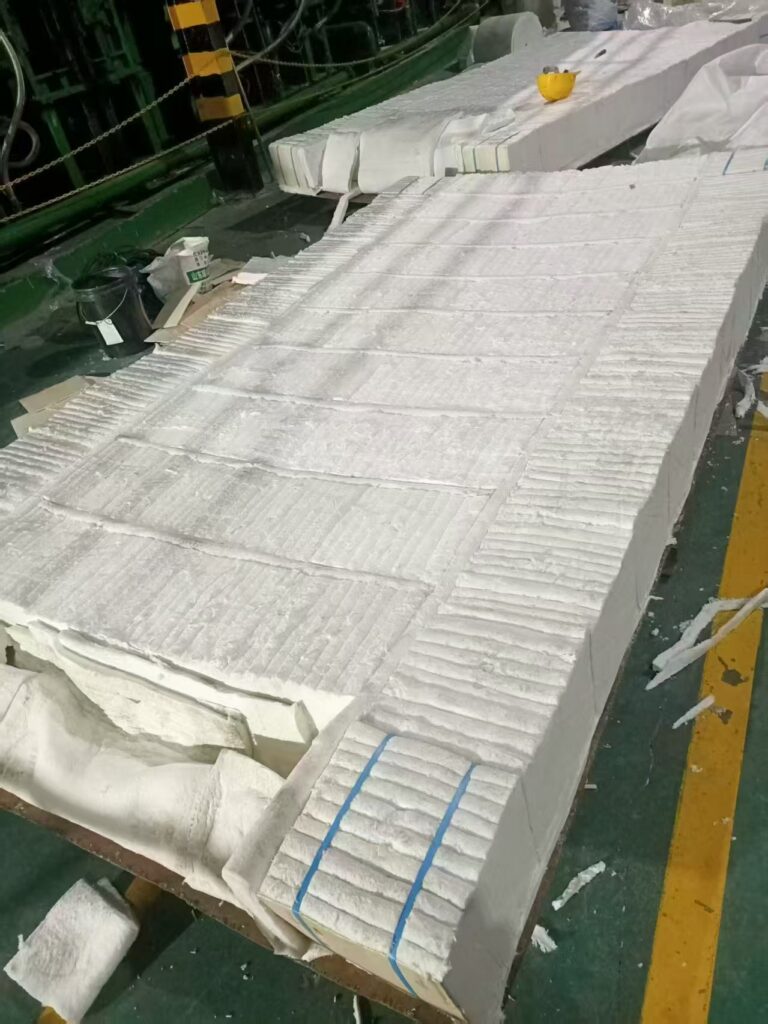
6. Ceramic Fiber Blanket vs. Ceramic Fiber Board
Ceramic fiber blanket and ceramic fiber board serve different installation requirements.
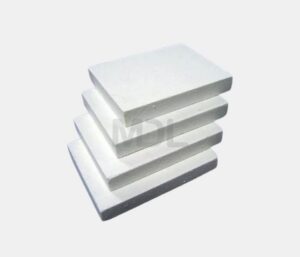
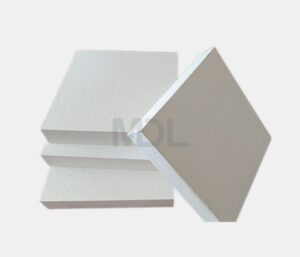
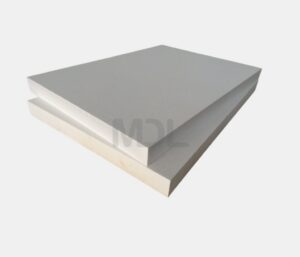
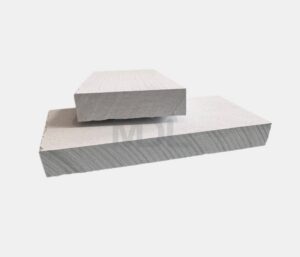
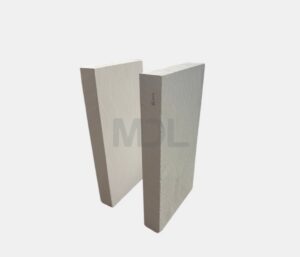
A ceramic fiber blanket is flexible and suitable for wrapping surfaces, layered linings and irregular shapes. A ceramic fiber board is rigid and can provide a more stable, flat surface where the installation design requires it.
The choice depends on equipment geometry, mechanical requirements, installation method and operating conditions.
For rigid insulation applications, explore our ceramic fiber board. For flexible, roll-form insulation, visit our ceramic fiber blanket product page.
7. How to Choose a Reliable Ceramic Fiber Blanket Supplier
When evaluating a ceramic fiber blanket manufacturer or wholesale supplier, industrial buyers should look beyond the initial quotation.
Consider these purchasing factors:
- Specification consistency: Verify temperature classification, density, thickness, width and roll length.
- Technical documentation: Request the applicable technical data sheet and safety documentation.
- Quality requirements: Confirm relevant test parameters and agreed inspection criteria.
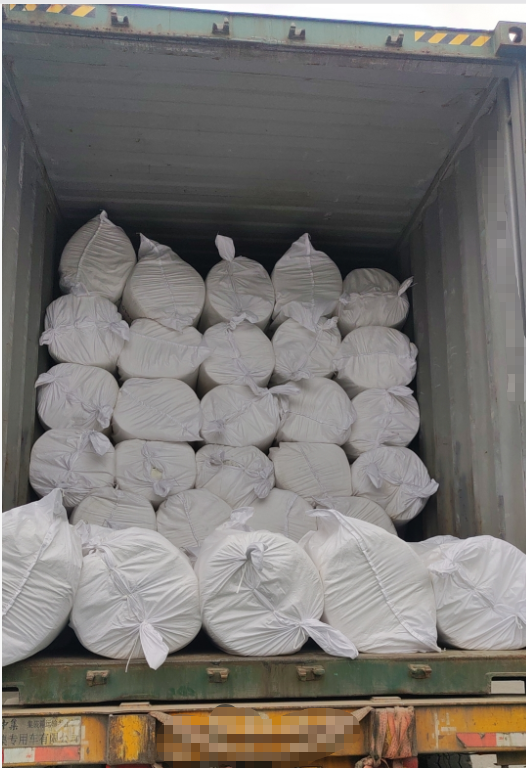
- Packaging: Check whether packaging is suitable for storage, handling and international transportation.
- Order flexibility: Discuss mixed-product shipments, customized dimensions and repeat orders where required.
- Shipping terms: Compare quotations using the same delivery terms, order quantity and destination port.
For distributors and industrial project buyers, comparing equivalent specifications and commercial terms helps avoid misleading price comparisons.
Frequently Asked Questions
What is the common density of a ceramic fiber blanket?
Common densities include 64, 96 and 128 kg/m³. The available options depend on the product grade and manufacturer’s specifications.
Can a 1260°C ceramic fiber blanket operate continuously at 1260°C?
Not necessarily. The classification temperature is not the same as the recommended continuous operating temperature. Confirm the suitable service temperature using the manufacturer’s technical data and actual operating conditions.
What thickness is commonly used for ceramic fiber blanket insulation?
Common thicknesses include 25 mm and 50 mm. The appropriate thickness depends on the thermal design, equipment temperature and available installation space.
Can I order custom-size ceramic fiber blankets?
Custom dimensions may be available depending on production capability, material grade and order quantity. Provide the required thickness, width, roll length and density when requesting a quotation.
What information is needed for a wholesale ceramic fiber blanket quotation?
Provide the required temperature grade, density, thickness, roll dimensions, order quantity, destination port and preferred shipping terms. These details help the supplier prepare a more accurate quotation.
Request a Ceramic Fiber Blanket Quotation from Mindelun
Looking for a ceramic fiber blanket supplier for your industrial insulation project or wholesale business?
Mindelun supports insulation material requirements for distributors, refractory contractors, furnace manufacturers and industrial users. Send us your required specifications and estimated order quantity to discuss suitable products, packaging and delivery options.
Contact Mindelun to discuss your ceramic fiber blanket requirements and request a quotation.