
¿Cuáles son los mejores materiales aislantes para calderas industriales?
Boiler insulation plays an important role in improving energy efficiency, reducing heat loss, protecting equipment and maintaining a safe operating environment. In industrial boiler systems, choosing the right insulation material depends on operating temperature, equipment structure, installation location and working conditions.
Common boiler insulation materials include ceramic fiber, calcium silicate board, rock wool and nano aerogel insulation blanket. Each material offers different advantages in thermal performance, mechanical strength, flexibility and installation.
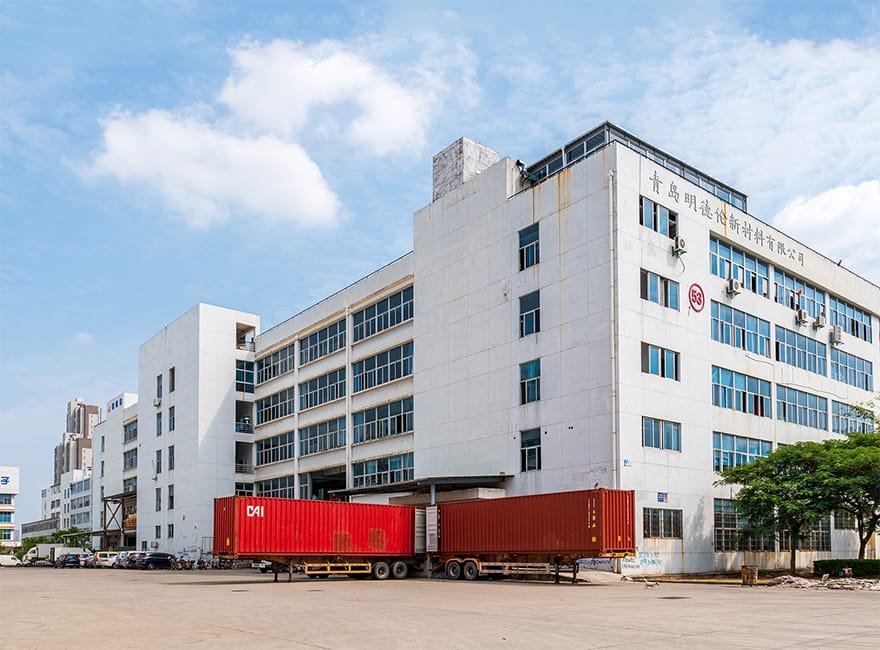
As an industrial insulation materials manufacturer and supplier, Mindelun provides ceramic fiber insulation, calcium silicate insulation, rock wool and advanced thermal insulation products for boilers, steam pipelines and industrial heating equipment.
This guide explains the common types of boiler insulation materials, their applications and how to select a suitable solution for different boiler components.
1. Why Is Boiler Insulation Important?
Industrial boilers operate under high-temperature conditions and continuously transfer heat to water, steam or other process media. Without effective insulation, a considerable amount of heat can escape through boiler walls, steam pipes, valves and other equipment surfaces.
Proper boiler insulation provides several benefits:
- Reduced Heat Loss: Minimizes heat transfer from hot boiler surfaces to the surrounding environment.
- Improved Energy Efficiency: Helps reduce unnecessary fuel consumption and operating costs.
- Enhanced Workplace Safety: Lowers external surface temperatures and reduces the risk of accidental burns.
- Equipment Protection: Helps protect boiler components and maintain stable operating conditions.
- Temperature Maintenance: Supports consistent temperatures in steam pipelines and thermal processing systems.
For industrial boiler projects, insulation should be selected according to the actual temperature profile, equipment design and operating environment rather than temperature grade alone.
2. Common Boiler Insulation Materials
Different boiler components require different insulation materials. The most commonly used options include ceramic fiber, calcium silicate board, rock wool and nano aerogel blanket.
2.1 Ceramic Fiber Insulation for Boilers
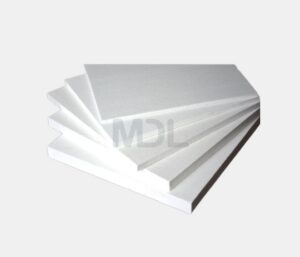
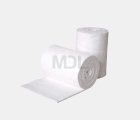
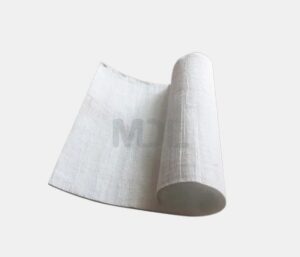
Ceramic fiber insulation is a lightweight, high-temperature refractory insulation material made primarily from alumina and silica fibers. It is available in several forms, including ceramic fiber blanket, board, paper and module.
Due to its low thermal conductivity, low heat storage and good thermal shock resistance, ceramic fiber insulation is widely used in high-temperature boiler areas and industrial heating equipment.
Main advantages:
- High-temperature resistance with multiple temperature grades
- Low thermal conductivity and low heat storage
- Lightweight and flexible structure
- Buena resistencia al choque térmico
- Easy cutting, installation and maintenance
- Available in blanket, board and module forms
Typical boiler applications:
- High-temperature combustion chambers
- Furnace walls and refractory backup linings
- High-temperature flue gas ducts
- Boiler access doors and inspection openings
- Thermal insulation of complex equipment surfaces
Mindelun supplies ceramic fiber blanket in different temperature grades, densities and thicknesses for industrial thermal insulation projects.
For flexible insulation and furnace lining, explore our Manta de fibra cerámica product.
For rigid insulation components, see our Placa de fibra cerámica product.
For prefabricated furnace lining systems, visit our Módulo de fibra cerámica página.
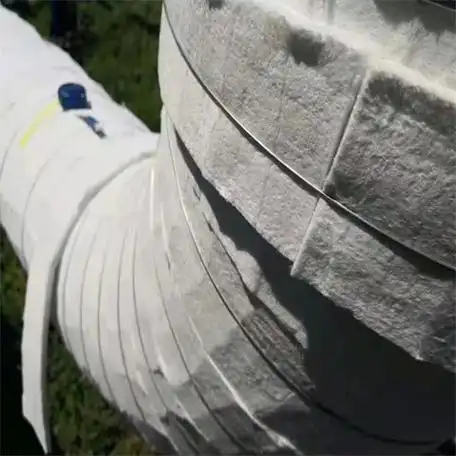
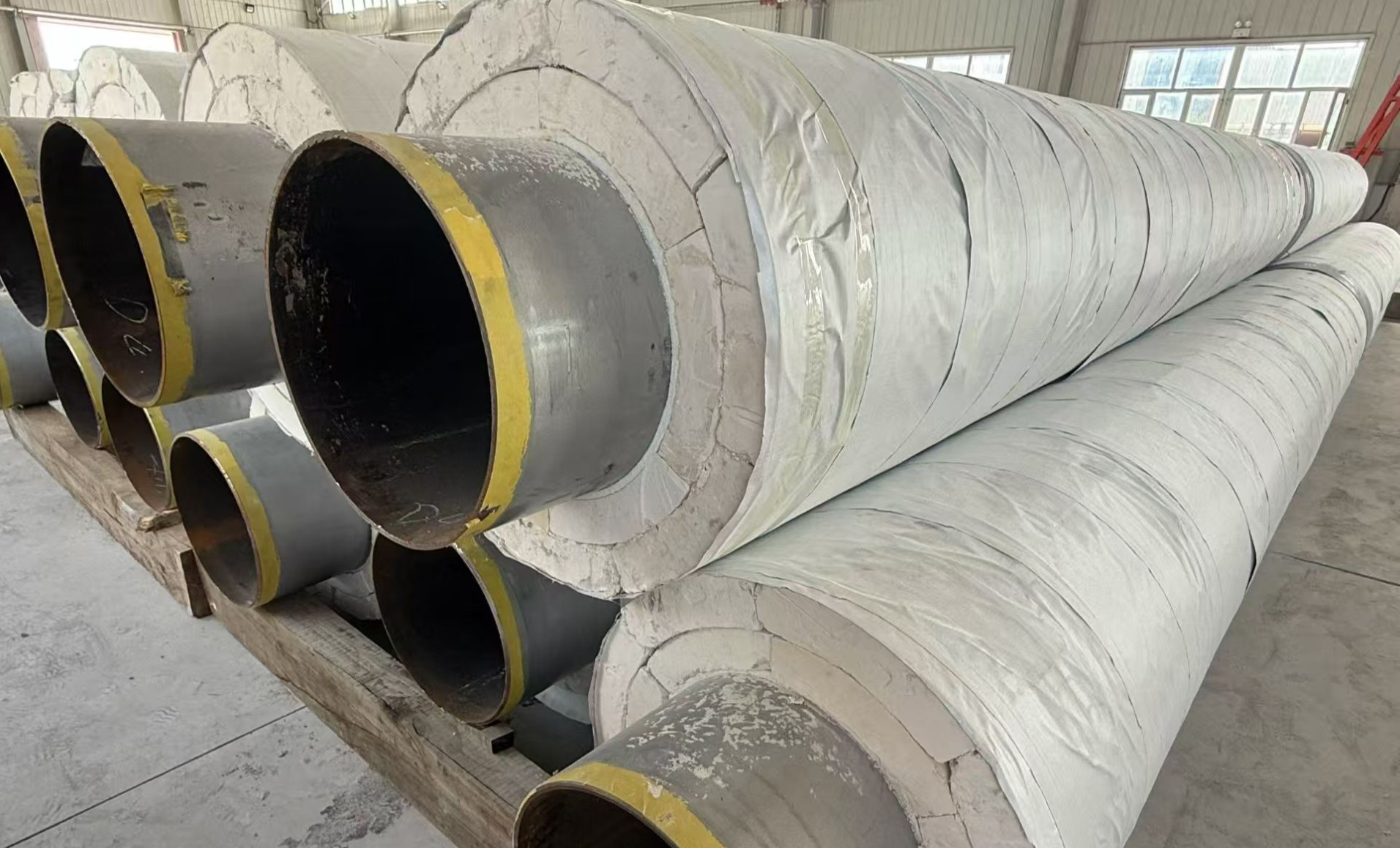
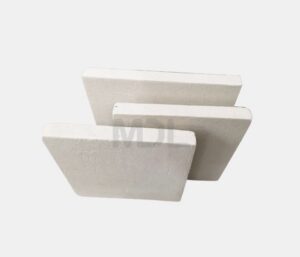
2.2 Calcium Silicate Board for Boiler and Pipe Insulation
Calcium silicate board is a rigid inorganic thermal insulation material known for its mechanical strength, dimensional stability and insulation performance.
Compared with flexible ceramic fiber blanket, calcium silicate board maintains a rigid shape and is suitable for applications requiring firm insulation panels or prefabricated pipe insulation components.
Main advantages:
- Rigid structure and good compressive strength
- Stable dimensions under suitable operating conditions
- Good thermal insulation performance
- Easy cutting and installation
- Suitable for flat surfaces and prefabricated insulation components
Typical boiler applications:
- Steam pipelines and hot water pipes
- Boiler auxiliary equipment
- Equipment insulation panels
- Pipe supports and selected structural insulation components
- Industrial thermal insulation systems
The appropriate calcium silicate grade should be selected according to the operating temperature, mechanical load and moisture conditions.
Mindelun offers different calcium silicate insulation boards, including low-density and medium-density products.
Descubre nuestra Placa de silicato de calcio de baja densidad for lightweight insulation applications and Placa de silicato de calcio de densidad media for applications requiring a balance of insulation and mechanical strength.
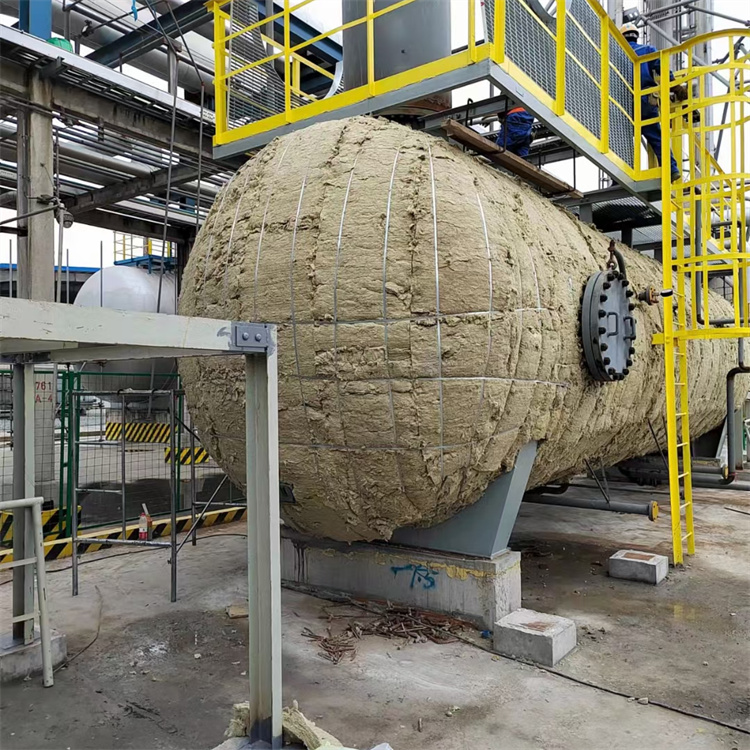
2.3 Rock Wool Insulation for Boiler Systems
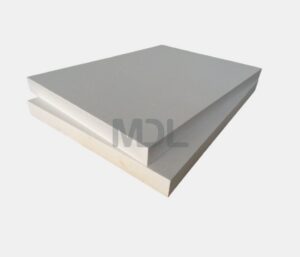
Rock wool is a mineral fiber insulation material manufactured from basalt and other mineral raw materials. It is available in blanket and board forms and is commonly used in industrial equipment and pipeline insulation.
Main advantages:
- Good thermal insulation performance
- Non-combustible mineral fiber material
- Good sound absorption
- Available in different densities and thicknesses
- Suitable for large-area insulation applications
Typical applications:
- Boiler outer casing insulation
- Low- and medium-temperature pipelines
- Hot air ducts and equipment surfaces
- Industrial tanks and supporting equipment
Rock wool should be selected according to its certified continuous operating temperature and the actual temperature of the insulated surface. It should not be used directly in high-temperature combustion zones unless the specific product is rated for those conditions.
Mindelun suministra Manta de lana de roca y Placa de lana de roca for industrial and building insulation applications.
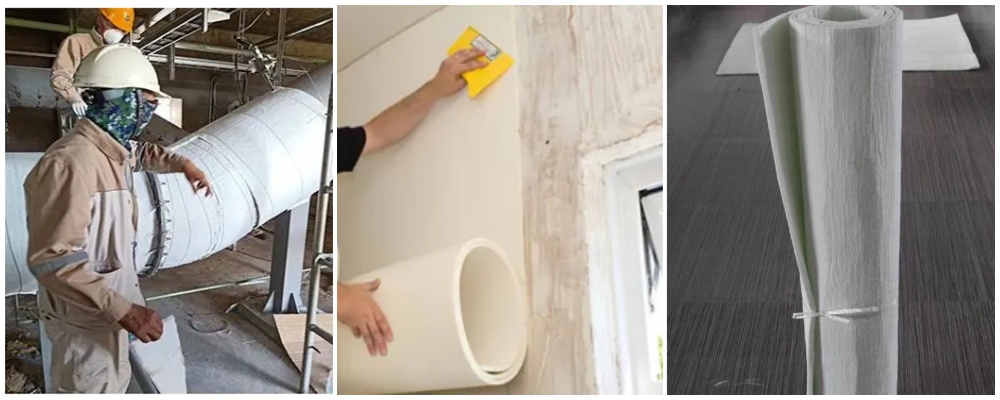
2.4 Nano Aerogel Insulation Blanket
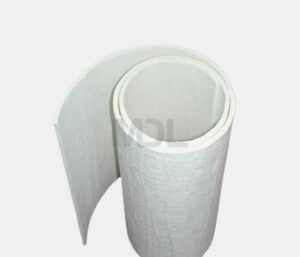
Nano aerogel insulation blanket is an advanced thermal insulation material made from silica aerogel and reinforced inorganic fibers.
Its nanoporous structure provides very low thermal conductivity, making it suitable for applications where insulation thickness and installation space are limited.
Main advantages:
- Very low thermal conductivity
- High insulation efficiency with relatively thin layers
- Flexible structure for wrapping pipes and equipment
- Good hydrophobic properties
- Lightweight and easy to process
Typical applications:
- Steam and process pipelines
- Industrial valves and fittings
- Thermal power plant equipment
- Petrochemical pipelines and tanks
- Insulation projects with limited installation space
Mindelun’s published nano aerogel blanket specification includes a thermal conductivity of ≤0.021 W/(m·K) and a recommended working temperature of 650°C for the listed product grade. Actual suitability should be confirmed against the project temperature and product technical data.
Más información sobre nuestro Manta aislante de nanoaerogel.
3. How to Choose Boiler Insulation Materials by Application
The most suitable boiler insulation material depends on where it will be installed and the conditions it must withstand.
| Boiler Component | Recommended Insulation Material | Main Selection Considerations |
|---|---|---|
| High-temperature combustion chamber | Manta / Módulo de fibra cerámica | High-temperature resistance and thermal shock |
| Furnace walls and hot surfaces | Ceramic Fiber Board / Blanket | Thermal performance and installation structure |
| High-temperature flue gas ducts | Ceramic Fiber Blanket / Board | Operating temperature and surface geometry |
| Steam pipelines | Calcium Silicate Board / Nano Aerogel | Temperature, insulation thickness and space |
| Boiler outer casing | Rock Wool Board / Blanket | Surface temperature, fire safety and cost |
| Valves and irregular fittings | Ceramic Fiber Blanket / Nano Aerogel | Flexibility and ease of installation |
| Equipment requiring rigid insulation | Placa de silicato de calcio | Compressive strength and dimensional stability |
The table provides general material-selection guidance. Final selection should consider the actual metal surface temperature, heat flux, insulation thickness, ambient conditions, mechanical loads and applicable project standards.
4. Ceramic Fiber vs. Calcium Silicate vs. Rock Wool vs. Aerogel
Although these materials can all be used in industrial thermal insulation systems, their physical properties and applications are different.
| Material | Estructura | Ventaja principal | Aplicación típica |
|---|---|---|---|
| Ceramic Fiber | Flexible blanket, rigid board or module | High-temperature insulation and low heat storage | Furnace lining and high-temperature boiler areas |
| Silicato de calcio | Rigid board | Mechanical strength and dimensional stability | Steam pipes and rigid equipment insulation |
| Lana de roca | Flexible blanket or rigid board | Cost-effective insulation and sound absorption | Boiler casing and suitable-temperature pipelines |
| Nanoaerogel | Thin flexible blanket | Very low thermal conductivity | Space-limited pipes and equipment |
For many industrial projects, a combination of insulation materials may provide a more practical solution than using one material throughout the entire boiler system.
For example, ceramic fiber may be used in high-temperature furnace sections, while calcium silicate or rock wool may be selected for suitable-temperature external equipment and pipelines.
5. Key Factors When Selecting Boiler Insulation Materials
Before purchasing boiler insulation materials, industrial buyers and engineering contractors should consider the following factors.
Temperatura de funcionamiento
Check both the continuous operating temperature and possible temperature fluctuations. The classification temperature of an insulation material is not necessarily its recommended continuous working temperature.
Espesor del aislamiento
The required thickness depends on heat loss targets, allowable surface temperature, available installation space and project requirements.
Density and Mechanical Strength
Rigid insulation boards may be more suitable where compression resistance and dimensional stability are important. Flexible blankets are generally easier to install around irregular surfaces.
Moisture and Environmental Conditions
Outdoor pipelines, steam systems and equipment exposed to water or condensation may require additional weatherproofing and protective cladding.
Installation and Maintenance
Consider the installation method, available fixing systems, maintenance access and the possibility of future insulation replacement.
Coste total del proyecto
Compare not only the material price but also insulation thickness, installation labor, service life, transportation and maintenance requirements.
6. Why Choose Mindelun as Your Ceramic Fiber Insulation Supplier?
Choosing a reliable ceramic fiber insulation supplier is important for maintaining product consistency, delivery schedules and project performance.
Mindelun supplies a wide range of industrial insulation materials for boilers, furnaces, pipelines and thermal equipment.
Our product portfolio includes:
- Manta, placa, papel y módulo de fibra cerámica
- Low Density and Medium Density Calcium Silicate Board
- Rock Wool Blanket and Board
- Manta aislante de nanoaerogel
- Other advanced thermal insulation materials
Mindelun supports industrial buyers with:
- Factory-direct supply and competitive quotations
- Multiple temperature grades and product specifications
- Customized thicknesses, densities and dimensions
- OEM and ODM manufacturing services
- Product samples and technical documentation
- Flexible order quantities and mixed-container shipments
- Export packaging and international delivery support
Whether you are an insulation distributor, boiler manufacturer, engineering contractor or industrial end user, Mindelun can help you identify suitable insulation materials according to your project requirements.
7. Frequently Asked Questions About Boiler Insulation
Q1: What is the best insulation material for industrial boilers?
There is no single best material for every boiler component. Ceramic fiber is suitable for high-temperature furnace areas, calcium silicate board is commonly selected for rigid insulation applications, and rock wool can be used for suitable-temperature external surfaces and pipelines. Nano aerogel is useful where installation space is limited.
Q2: Can ceramic fiber insulation be used for boilers?
Yes. Ceramic fiber insulation is suitable for high-temperature boiler components, including combustion chambers, furnace walls, hot gas ducts and selected equipment surfaces. The correct temperature grade and product form should be selected according to actual operating conditions.
Q3: Is calcium silicate board suitable for boiler insulation?
Yes. Calcium silicate insulation board is used in suitable boiler and industrial equipment applications where rigid structure, compressive strength and dimensional stability are required. The selected grade must meet the actual operating temperature and mechanical requirements.
Q4: What is the difference between ceramic fiber board and calcium silicate board?
Ceramic fiber board is manufactured from refractory ceramic fibers and is designed for high-temperature insulation applications. Calcium silicate board is a rigid inorganic insulation material commonly selected for applications requiring mechanical strength and dimensional stability. Their temperature ratings and suitable applications depend on the specific product grade.
Q5: How do I choose the right thickness for boiler insulation?
Insulation thickness depends on operating temperature, heat loss targets, allowable external surface temperature, available space and relevant engineering standards. A thermal calculation should be completed for the specific boiler or pipeline rather than selecting thickness based on a general recommendation.
Q6: Does Mindelun supply boiler insulation materials in bulk?
Yes. Mindelun supports sample orders, small orders and bulk shipments, including 20GP and 40HQ containers. Mixed-container orders are also available for customers purchasing different insulation materials.
Q7: Can Mindelun provide customized insulation products?
Yes. Mindelun supports customized product dimensions, thicknesses, densities and packaging, as well as OEM and ODM services according to customer requirements.
8. Contact Mindelun for Industrial Boiler Insulation
Looking for a reliable boiler insulation supplier in China?
Mindelun supplies ceramic fiber insulation, calcium silicate board, rock wool and nano aerogel insulation materials for industrial boilers, steam pipelines and thermal equipment.
Send us your application details, operating temperature, required dimensions and estimated quantity. Our team will help you identify suitable insulation materials and provide a quotation for your project.
Contacta con Mindelun today for product specifications, samples and bulk supply solutions.
 Spanish
 English
 Arabic
 French
 German
 Portuguese
 Russian
 Indonesian