Warum variieren die Preise für Keramikfasermatten so stark?
The ceramic fiber blanket market has become increasingly competitive. With more manufacturers and suppliers offering similar-looking products, buyers can receive significantly different quotations for what appears to be the same specification.
For distributors, wholesalers, contractors and industrial users, this creates an important purchasing question: Should you choose the lowest-priced ceramic fiber blanket, or pay more for a product with better quality and performance?
In reality, ceramic fiber blanket prices are influenced by several factors, including fiber quality, density, manufacturing processes, thermal shrinkage, product dimensions and packaging.
A low quotation may be attractive, but it does not always mean lower overall purchasing costs. Understanding the differences between products is the first step toward making a better purchasing decision.
1. Why Are Ceramic Fiber Blanket Prices Different?
When comparing quotations from different ceramic fiber blanket manufacturers, buyers may notice that prices vary even when the temperature classification and density appear identical.
There are several possible reasons.
1.1 Fiber Quality and Raw Materials
Fiber composition and raw material quality influence the thermal properties and stability of ceramic fiber blankets.
Different manufacturers may use different raw material formulations and production controls. These differences can affect fiber uniformity, shot content, thermal shrinkage and product consistency.
Buyers should not evaluate a blanket based only on its product name or temperature classification. Requesting technical data and samples can help identify differences between suppliers.
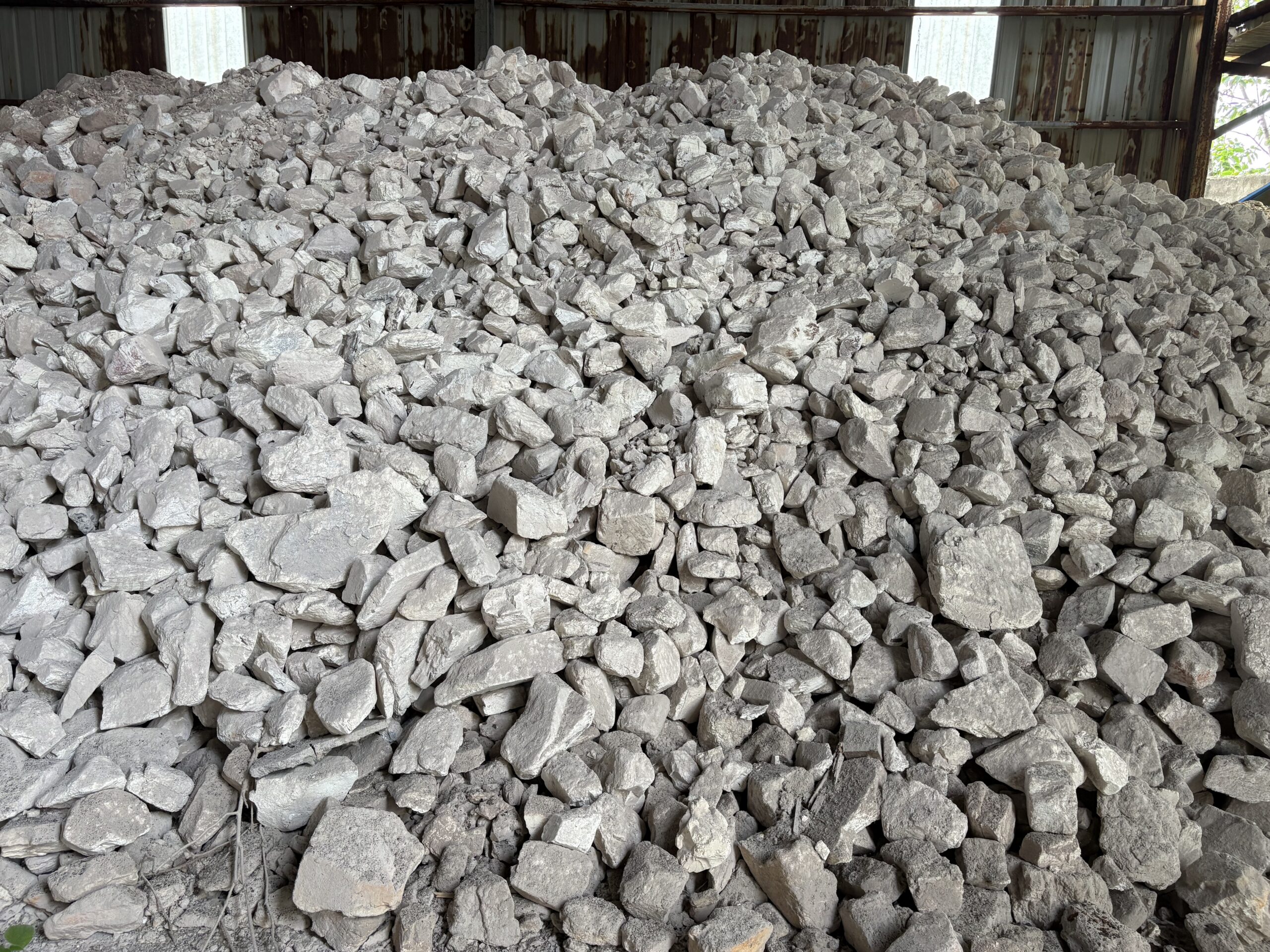
1.2 Density and Actual Product Weight
Density is one of the most important factors affecting ceramic fiber blanket performance and price.
Common density options include:
- 64 kg/m³
- 96 kg/m³
- 128 kg/m³
A higher-density blanket generally contains more material per unit volume. However, higher density does not automatically mean better insulation performance for every application.
The appropriate density depends on the furnace design, installation method, operating conditions and required mechanical properties.
Buyers should confirm that the quoted density is consistent with the actual product supplied.
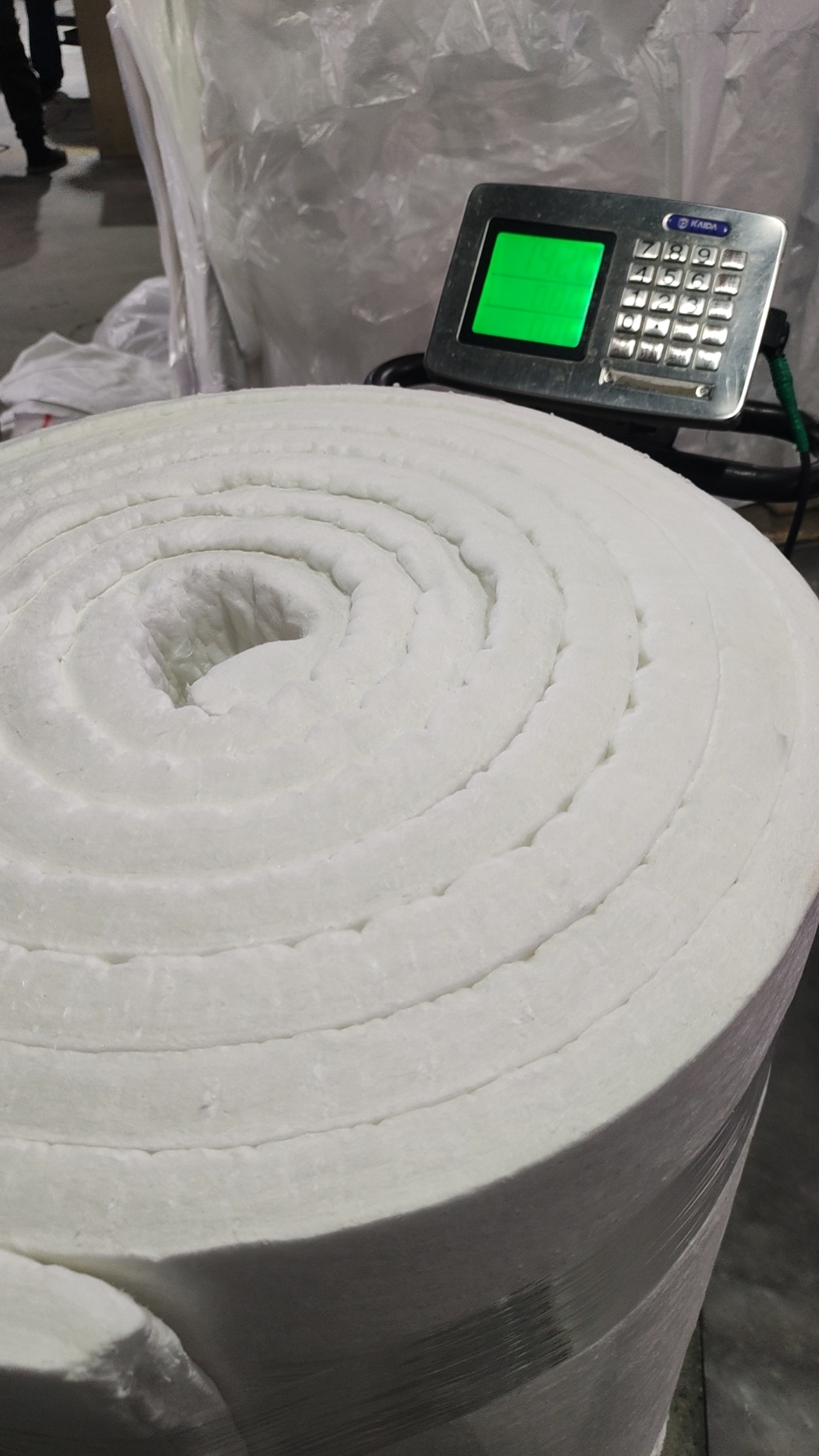
1.3 Manufacturing Process and Quality Control
Manufacturing processes can influence fiber distribution, blanket uniformity and mechanical properties.
Important factors include fiber formation, needling, thickness control and production consistency.
A reliable ceramic fiber blanket manufacturer should maintain stable production conditions and perform appropriate quality inspections.
For bulk orders, consistency between production batches is particularly important because differences in thickness or density can create installation problems.
1.4 Thermal Shrinkage and High-Temperature Performance
Thermal shrinkage is an important parameter when selecting ceramic fiber insulation.
When a blanket is exposed to high temperatures for extended periods, excessive shrinkage may create gaps in the insulation lining and increase heat loss.
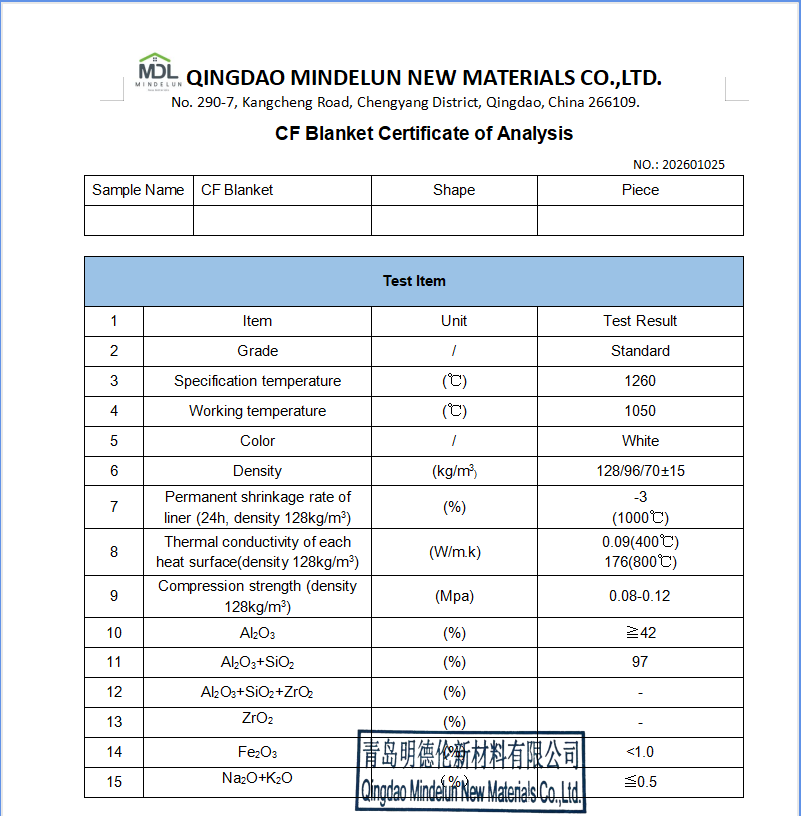
Buyers should compare permanent linear shrinkage data under the same test temperature and duration.
It is also important to distinguish between classification temperature and continuous operating temperature. A blanket classified at 1260°C should not automatically be considered suitable for continuous operation at 1260°C.
1.5 Product Dimensions and Packaging
Different suppliers may quote different roll lengths, widths, thicknesses and packaging methods.
For example, a 25 mm thick blanket may have different roll lengths depending on its density and manufacturing specifications.
Packaging also affects transportation, storage and container-loading efficiency.
Therefore, buyers should compare the actual quantity and dimensions supplied rather than relying only on the price per kilogram.
2. How to Compare Ceramic Fiber Blanket Quotations
Before choosing a supplier, make sure all quotations are based on the same technical requirements.
The following comparison table can help buyers evaluate different offers.
| Comparison Item | What Buyers Should Check |
|---|---|
| Klassifizierungstemperatur | Confirm the same temperature grade |
| Fiber Type | Confirm material composition and product grade |
| Dichte | 64 / 96 / 128 kg/m³ or other specified density |
| Dicke | Confirm actual thickness |
| Width and Length | Compare roll dimensions |
| Wärmeleitfähigkeit | Compare values at the same mean temperature |
| Linear Shrinkage | Check test temperature and duration |
| Tensile Strength | Review relevant test data |
| Verpackung | Confirm roll packaging and export protection |
| Delivery Terms | Compare EXW, FOB or CIF on the same basis |
Wichtig: A quotation with a lower price per kilogram may not provide the same material quantity, dimensions or performance as a higher-priced quotation.
For a fair comparison, request the same technical specification from every supplier.
3. Is a Cheaper Ceramic Fiber Blanket Always a Better Choice?
Not necessarily.
For some applications, standard ceramic fiber blankets may be sufficient. For others, product consistency and high-temperature stability are more important than the initial purchase price.
Consider two purchasing situations:
Situation A: General Industrial Insulation
For applications with relatively stable operating conditions and suitable temperature requirements, a standard ceramic fiber blanket may provide a cost-effective solution.
In this case, buyers can focus on:
- Suitable temperature grade
- Correct density and thickness
- Stable dimensions
- Reliable batch consistency
- Competitive factory pricing
Situation B: High-Temperature Industrial Furnaces
For demanding furnace applications, buyers should pay closer attention to:
- Permanent linear shrinkage
- Wärmeleitfähigkeit
- Fiber composition
- Temperature cycling
- Installation conditions
- Long-term insulation stability
Selecting an unsuitable product simply because it has a lower initial price may increase maintenance requirements or lead to premature replacement.
The right product is not necessarily the most expensive one. It is the product that meets the actual working conditions without unnecessary specification upgrades.
4. How to Choose the Right Density and Thickness
Density and thickness should be selected according to the insulation design rather than price alone.
Common Ceramic Fiber Blanket Specifications
| Parameter | Common Options |
|---|---|
| Klassifizierungstemperatur | 1260 °C |
| Dichte | 64 / 96 / 128 kg/m³ |
| Dicke | 12,5 / 25 / 50 mm |
| Product Form | Blanket Rolls |
| Anwendungen | Furnace, kiln, pipeline and equipment insulation |
How to Select Density
64 kg/m³: A lightweight option for applications where the insulation design permits lower density.
96 kg/m³: A commonly used option for general industrial thermal insulation.
128 kg/m³: A higher-density option for applications requiring more material per unit volume and suitable handling or installation properties.
These are general selection considerations, not universal performance rankings. The final density should be determined by the application and technical requirements.
How to Select Thickness
Thickness is related to the required thermal resistance and insulation structure.
- 12.5 mm: Suitable for thinner insulation layers and selected equipment applications.
- 25 mm: A common option for industrial insulation systems.
- 50 mm: Used where a thicker insulation layer is required.
For some projects, multiple layers may be installed to achieve the required insulation thickness. The final design should consider operating temperature, heat loss targets, installation space and lining structure.
5. Five Questions to Ask Before Ordering Ceramic Fiber Blankets
Before placing a bulk order, buyers should ask suppliers the following questions.
1. Can you provide a technical data sheet?
Check temperature classification, density, thermal conductivity, shrinkage and other relevant specifications.
2. Can you provide samples?
Samples allow buyers to inspect thickness, appearance, flexibility and handling characteristics before purchasing larger quantities.
3. Is the density consistent between batches?
Batch consistency is important for distributors and contractors handling repeated projects.
4. Can you provide customized packaging?
Suitable packaging helps protect products during transportation and improves warehouse and container-loading arrangements.
5. Can you supply other insulation products?
For larger projects, purchasing ceramic fiber blankets together with ceramic fiber boards, Keramikfaserpapiere oder Keramikfasermodule from one supplier may simplify procurement and shipment coordination.
6. Why Choose a Reliable Ceramic Fiber Blanket Manufacturer?
In a competitive market, the difference between suppliers is not only the quoted price.
A professional manufacturer should be able to provide:
- Clear and accurate product specifications
- Stable product quality
- Different density and thickness options
- Technische Unterstützung bei der Produktauswahl
- Customized packaging
- Reliable production and delivery coordination
- Support for wholesale and project orders
For international buyers, these factors can help reduce purchasing risks and improve long-term supply stability.
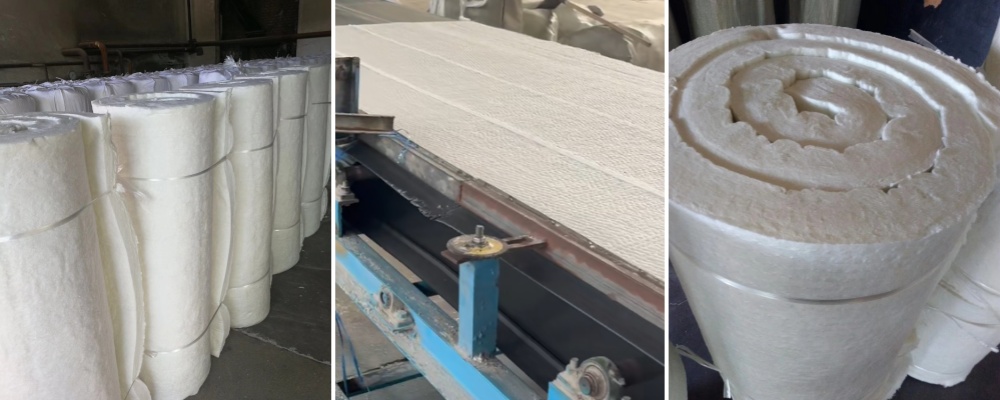
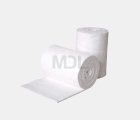
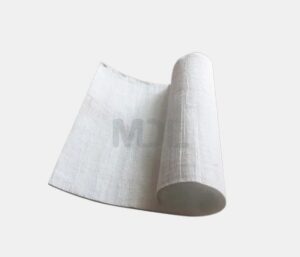
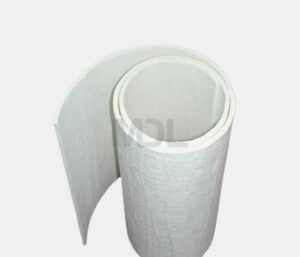
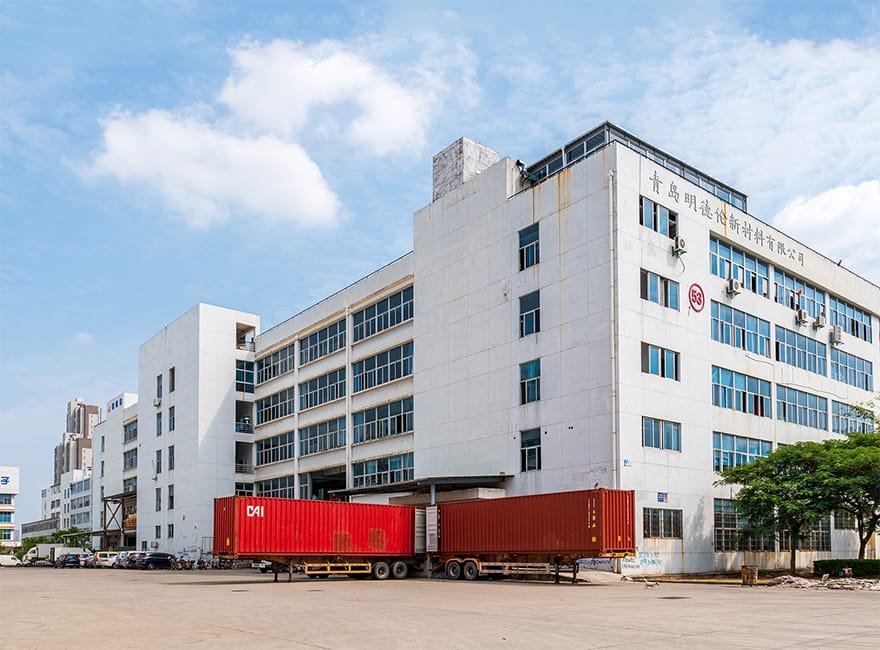
Mindelun supplies ceramic fiber blankets for industrial furnaces, kilns, pipelines and other high-temperature insulation applications.
Our common product options include 1260°C classification temperature, densities of 64, 96 and 128 kg/m³, and thicknesses of 12.5, 25 and 50 mm.
We also supply ceramic fiber boards, papers and modules to support different industrial insulation requirements.
Entdecken Sie unser Ceramic Fiber Blanket Product page for more specifications.
For complete furnace lining applications, visit our Lösungen für die Isolierung von Industrieöfen Seite.
7. How to Get a More Accurate Keramikfasermatte Quotation
To receive a comparable quotation from different manufacturers, buyers should provide the following information:
- Classification temperature or required operating temperature
- Dichte
- Dicke
- Width and roll length
- Total quantity
- Verpackungsvorschriften
- Destination port and preferred delivery terms
With these details, suppliers can provide more accurate quotations and reduce misunderstandings during order confirmation.
Conclusion: Compare Product Value, Not Just the Lowest Price
As competition in the ceramic fiber blanket market increases, buyers have more suppliers and quotations to choose from. However, products with similar labels may differ in fiber quality, manufacturing consistency, thermal shrinkage and actual dimensions.
The best purchasing decision is not always the lowest price per kilogram.
By comparing technical specifications, requesting samples, checking quality consistency and evaluating the total procurement cost, buyers can select ceramic fiber blankets that match their applications and budgets.
Mindelun welcomes inquiries from global distributors, wholesalers, contractors and industrial users.
Contact us with your required specifications to receive a suitable ceramic fiber blanket solution and quotation.
 German
 English
 Arabic
 French
 Spanish
 Portuguese
 Russian
 Indonesian