Ceramic Fiber Module Manufacturer for Industrial Furnace Linings
Produktbeschreibung:
Zeitarbeitsstufe: 1050°C,1260°C,1400°C, 1430°C, 1450°C
Dichte: 128kg/m₃, 200 kg/m₃, 220 kg/m₃
Spezifikation:
• 150x300x300/600mm
• 200x300x300/600mm
• 250x300x300/600mm
• 300×300 x 300/600mm
Individuelle Spezifikationen sind möglich.
Teilen
Ceramic Fiber Module Manufacturer for Industrial Furnace Linings
Mindelun ist ein Fachmann ceramic fiber module manufacturer and supplier in China, providing high-temperature insulation modules for industrial furnaces, kilns, and thermal processing equipment.
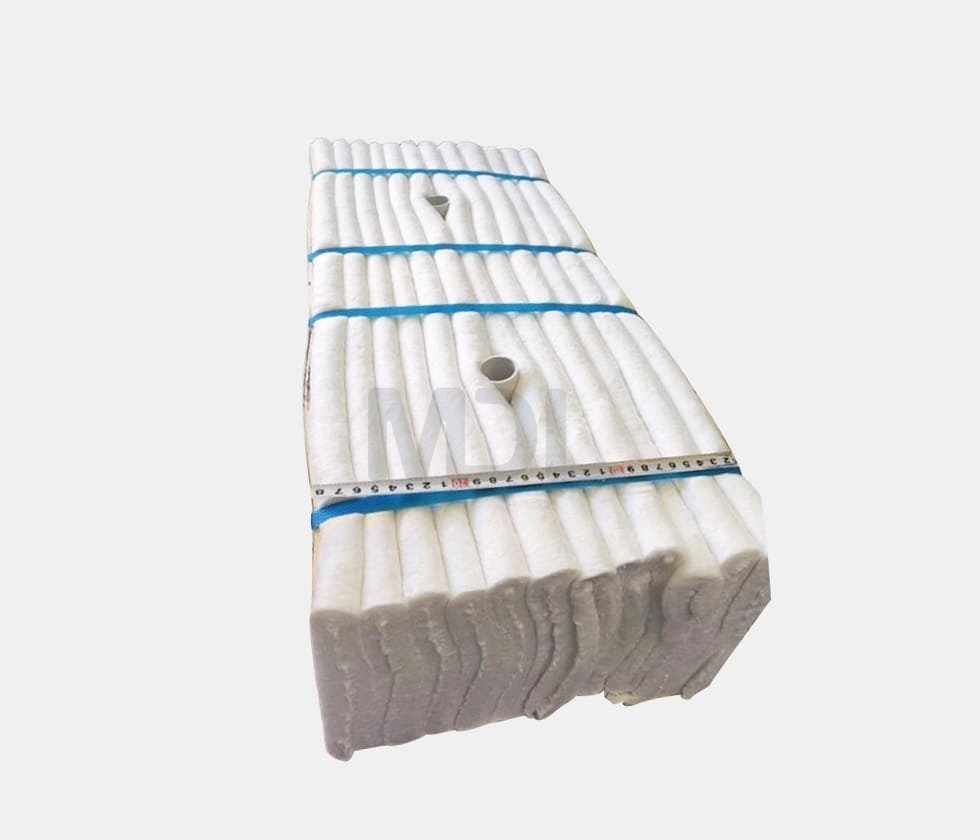
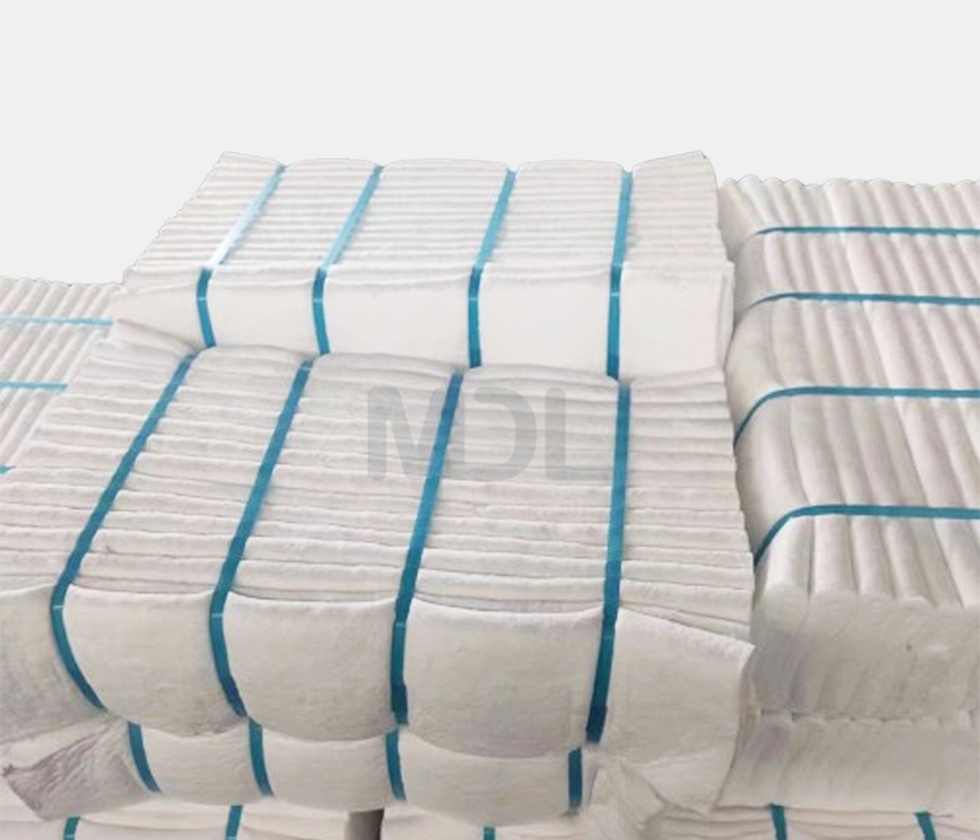
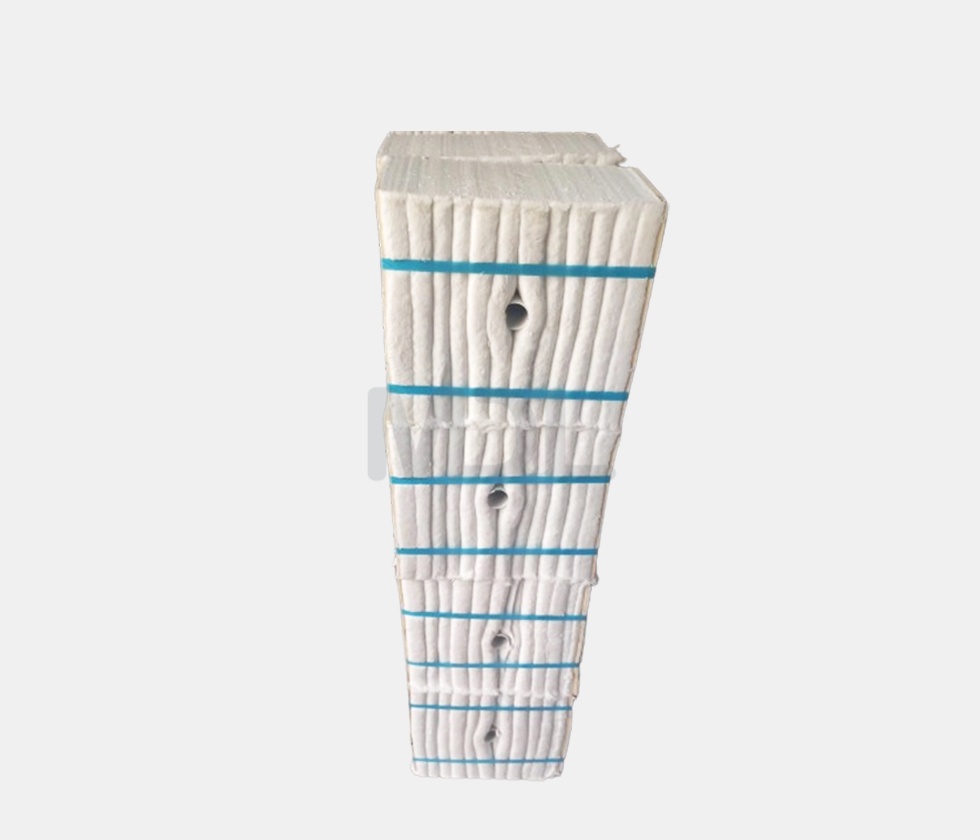
Our ceramic fiber modules are manufactured by folding or stacking ceramic fiber blankets into compact insulation blocks. With finished module densities of 200, 220, and 260 kg/m³, they are designed for modular furnace lining systems that require lightweight construction, low thermal conductivity, and efficient installation.
Available in different temperature grades and customized dimensions, Mindelun ceramic fiber insulation modules provide reliable thermal insulation for ceramic kilns, steel furnaces, petrochemical heating equipment, and other high-temperature industrial applications.
What Is a Ceramic Fiber Module?
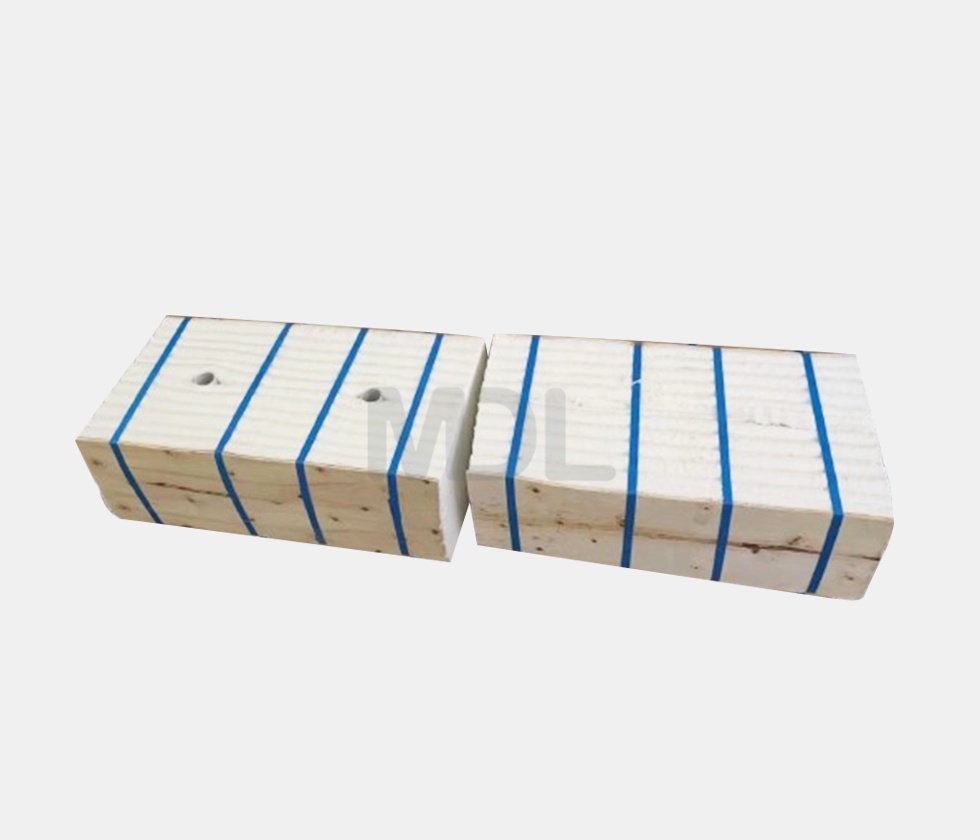
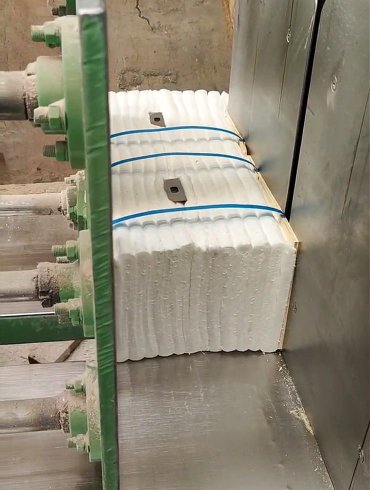
A ceramic fiber module is a prefabricated refractory insulation unit made from ceramic fiber blanket. The blanket is folded or stacked into a compact block and assembled with a suitable anchoring system for installation on industrial furnace walls, roofs, and other high-temperature surfaces.
Unlike conventional ceramic fiber blankets supplied in rolls, ceramic fiber modules are pre-formed into blocks for modular furnace lining installation.
Compared with many traditional refractory brick linings, ceramic fiber module systems are lightweight and have lower heat storage. Their modular construction can also simplify installation and support more efficient furnace maintenance.
Ceramic Fiber Module Manufacturing Structure
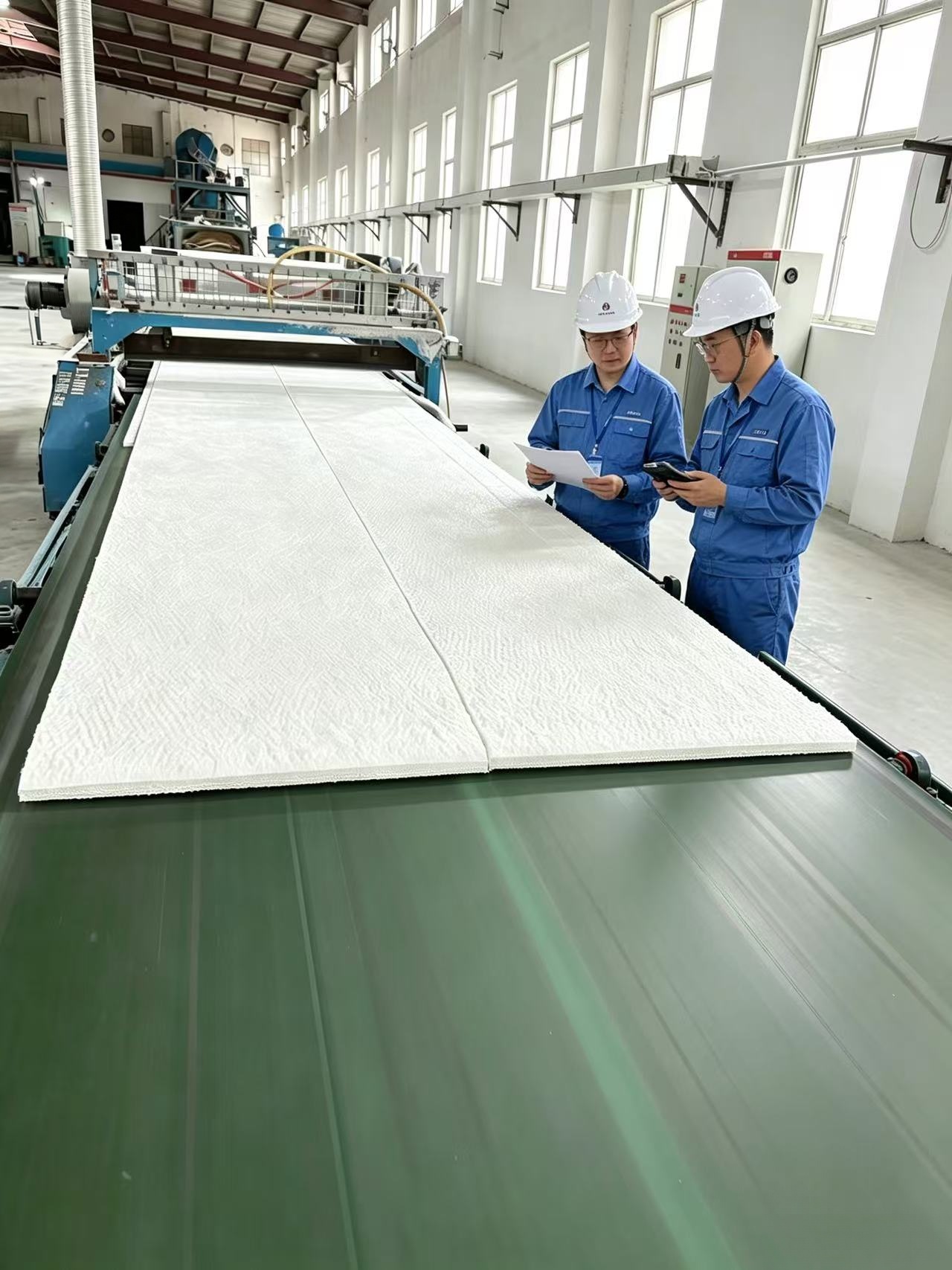
Mindelun ceramic fiber modules are produced using ceramic fiber blankets with base densities of 96 kg/m³ or 128 kg/m³.
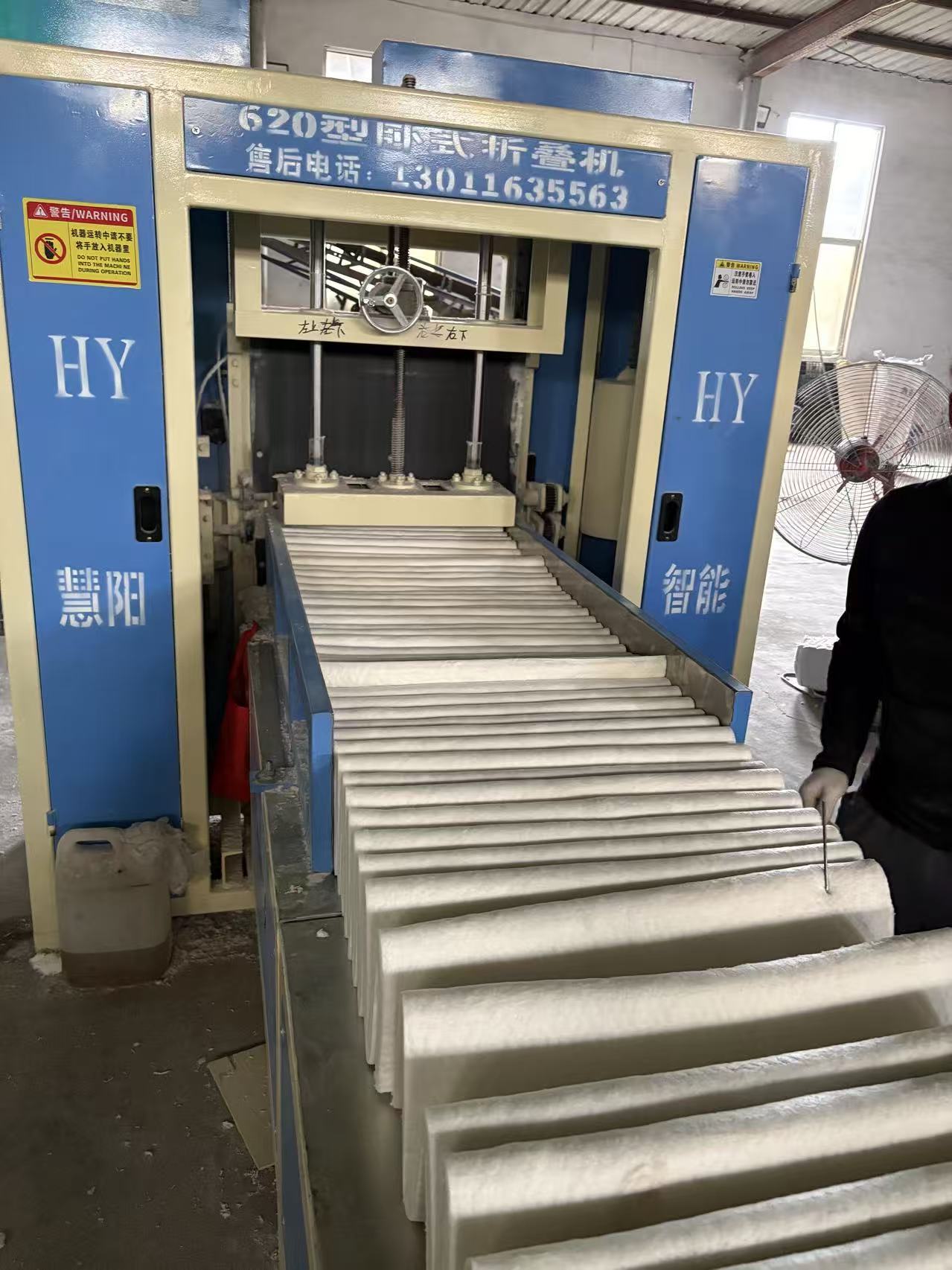
The blanket is processed through folding or stacking methods to form compact module blocks. The finished modules are available in three density options:
- 200 kg/m³
- 220 kg/m³
- 260 kg/m³
Wichtig: Base blanket density and finished module density refer to different production stages. They are not interchangeable specifications.
Depending on furnace design and installation requirements, different module configurations and anchoring arrangements can be considered.
Key Features of Ceramic Fiber Insulation Modules
1. Lightweight Furnace Lining
Ceramic fiber modules provide lightweight refractory insulation compared with many traditional dense refractory materials, helping reduce the structural load of furnace linings.
2. Low Thermal Conductivity
The porous ceramic fiber structure helps reduce heat transfer and limit energy loss from industrial heating equipment.
3. Low Heat Storage
The lightweight fiber structure stores less heat than many conventional refractory linings, supporting faster heating and cooling cycles under suitable operating conditions.
4. Thermal Shock Resistance
Ceramic fiber modules can withstand repeated temperature changes within their recommended operating conditions.
5. Modular Installation
Prefabricated module blocks support organized installation and help simplify furnace lining construction and maintenance.
6. Multiple Density Options
Finished module densities of 200, 220, and 260 kg/m³ are available to meet different insulation and structural requirements.
Ceramic Fiber Module Specifications
| 1 | Artikel | Einheit | Testergebnis/COM | Testergebnis/ST | Testergebnis/HP | Testergebnis/HA | Testergebnis/ZA | Testergebnis/HZ |
| 2 | Note | / | 1000-fach gefaltet / gestapelt / Furnierblock | 1260 Falten / Stapeln / Furnierblock | 1260 Falten / Stapeln / Furnierblock | 1360 Falten / Stapeln / Furnierblock | 1400 Falten / Stapeln / Furnierblock | 1450 Falten / Stapeln / Furnierblock |
| 3 | Spezifikationstemperatur | (℃) | 1050 | 1260 | 1260 | 1360 | 1400 | 1450 |
| 4 | Betriebstemperatur | (℃) | 800 | 1050 | 1100 | 1150 | 1200 | 1350 |
| 5 | Farbe | / | Weiß | Reines Weiß | Reines Weiß | Reines Weiß | Reines Weiß | Reines Weiß |
| 6 | Dichte | (kg/m³) | 220/200/128±15 | 220/200/128±15 | 220/200/128±15 | 220/200/128±15 | 220/200/128±15 | 220/200/128±15 |
| 7 | Dauerhafte Schrumpfung des Auskleidungsmaterials (24 h, Dichte 128 kg/m₃) | (%) | -4 | -3 | -3 | -3 | -3 | -3 |
| (1000 °C) | (1100 °C) | (1000 °C) | (1250 °C) | (1250 °C) | (1350 °C) | |||
| 8 | Wärmeleitfähigkeit der einzelnen Wärmeflächen (Dichte 128 kg/m³) | (W/m·K) | 0,09 (400 °C) | 0,09 (400 °C) | 0,09 (400 °C) | 0,12 (600 °C) | 0,132 (600 °C) | 0,16 (800 °C) |
| 0,16 (800 °C) | 0,16 (800 °C) | 0,16 (800 °C) 0,20 (1000 °C) |
0,16 (800 °C) 0,20 (1000 °C) |
0,22 (1000 °C) | 0,22 (1000 °C) | |||
| 9 | Druckfestigkeit (Dichte 128 kg/m₃) | (MPa) | ≧0,04 | ≧0,04 | ≧0,04 | ≧0,06 | ≧0,06 | ≧0,06 |
| 10 | Al₂O₃ | (%) | ≧40 | ≧42 | ≧47 | ≧45 | ≧45 | ≧40 |
| 11 | Al₂O₃ + SiO₂ | (%) | 96 | 97 | 99 | 99 | – | – |
| 12 | Al₂O₃ + SiO₂ + ZrO₂ | (%) | – | – | – | – | 99 | 99 |
| 13 | ZrO₂ | (%) | – | – | – | – | 5–7 | 15–17 |
| 14 | Fe₂O₃ | (%) | <1,2 | <1,0 | <0,2 | <0,2 | <0,2 | <0,2 |
| 15 | Na₂O + K₂O | (%) | <0,5 | <0,5 | <0,2 | <0,2 | <0,2 | <0,2 |
| 16 | Dicke | (mm) | 150/200/250/300 | |||||
| 17 | Breite | (mm) | 300 | |||||
| 18 | Länge | (mm) | 300/600 | |||||
Applications of Ceramic Fiber Furnace Modules
Ceramic fiber modules are widely used in industrial equipment requiring high-temperature refractory insulation.
Ceramic and Kiln Industry
- Tunnel kilns
- Shuttle kilns
- Roller hearth kilns
- Industrial ceramic furnaces
Steel and Metallurgical Industry
- Reheating furnaces
- Annealing furnaces
- Walking beam furnaces
- Furnace walls and roofs
- Hot air ducts and high-temperature pipelines
Petrochemische Industrie
- Cracking furnaces
- Reforming furnaces
- Heating furnaces
- Coke ovens and flue systems
Environmental Protection Industry
- Waste incinerators
- RTO systems
- SCR catalytic furnaces
- High-temperature exhaust gas treatment equipment
Ceramic Fiber Module vs. Ceramic Fiber Blanket and Board
Although these products are all made from ceramic fiber, their structures and applications are different.
| Produkt | Structure | Main Application |
|---|---|---|
| Keramikfasermatte | Flexible insulation material supplied in rolls | Wrapping, lining layers, and irregular surface insulation |
| Keramikfaserplatte | Rigid and flat insulation panels | Furnace panels, equipment insulation, and rigid lining sections |
| Keramikfasermodul | Folded or stacked prefabricated insulation blocks | Modular furnace wall and roof lining systems |
If you need flexible insulation material supplied in rolls, explore our Keramikfasermatte.
For rigid, flat insulation panels, visit our Keramikfaserplatte.
For complete furnace insulation projects, see our Lösungen für die Isolierung von Industrieöfen.
Why Choose Mindelun Ceramic Fiber Modules?
- Multiple Temperature Grades: Options for different industrial furnace operating conditions.
- Three Finished Module Densities: 200, 220, and 260 kg/m³.
- Customized Dimensions: Module sizes and configurations can be discussed according to project drawings.
- Industrial Supply: Support for distributors, furnace manufacturers, contractors, and industrial end users.
- OEM and ODM Services: Customized specifications, packaging, and branding options.
- One-Stop Insulation Supply: Ceramic fiber blankets, boards, papers, modules, and other insulation materials can be sourced together.
Häufig gestellte Fragen
1. What is the density of ceramic fiber modules?
Mindelun ceramic fiber modules are available in finished module densities of 200, 220, and 260 kg/m³. The base ceramic fiber blanket used for production has a density of 96 or 128 kg/m³.
2. What is the difference between module density and blanket density?
Blanket density refers to the density of the ceramic fiber blanket before module processing. Module density refers to the finished module specification. These are different production-stage specifications.
3. What temperature grades are available?
Available grades include COM, ST, HP, HA, ZA, and HZ. Their specification temperatures range from 1050°C to 1450°C. The suitable grade depends on the actual furnace conditions and recommended working temperature.
4. Can ceramic fiber modules be customized?
Yes. Mindelun can discuss customized module dimensions and configurations according to furnace drawings, installation requirements, and project specifications.
5. Where are ceramic fiber modules used?
They are commonly used in ceramic kilns, steel reheating furnaces, petrochemical heating furnaces, waste incinerators, and other industrial high-temperature equipment.
6. Do you supply ceramic fiber blankets and boards?
Yes. Mindelun also supplies ceramic fiber blankets, boards, papers, ropes, textiles, and other high-temperature insulation products.
Request a Quote for Keramikfasermodule
Looking for a reliable ceramic fiber module manufacturer in China?
Send us your required temperature grade, finished module density, dimensions, estimated quantity, or furnace drawings. Mindelun will help you select suitable ceramic fiber insulation modules for your industrial furnace project.
Contact us for product specifications, samples, and a competitive quotation.
Professioneller Hersteller von Dämmstoffen in China
Mindelun bietet ein umfassendes Sortiment an Keramikfasern, Mineralwolle, Kalziumsilikat, Quarzfasern und hochmodernen Dämmstoffen für industrielle Anwendungen. Von Standardprodukten bis hin zu maßgeschneiderten Dämmlösungen unterstützen wir unsere Kunden dabei, die thermische Effizienz, den Anlagenschutz und die Betriebsleistung zu verbessern.
Ähnliche Produkte
-
Isolierung aus Keramikfasern
Ceramic Fiber Tape Manufacturer | High Temperature Insulation Tape
Weiterlesen
Starten Sie Ihr Projekt mit Dämmprodukten von Mindelun
Teilen Sie uns Ihre Anforderungen, Zeichnungen, Muster oder Ideen mit. Unser Entwicklungs- und Fertigungsteam erarbeitet professionelle Lösungen, die genau auf Ihre Bedürfnisse zugeschnitten sind.
NOTRUF:
Wir sind ein professioneller und seriöser Hersteller von Hochtemperatur-Dämmstoffe. Wir produzieren und vertreiben hauptsächlich Produkte unter unserer eigenen Marke, wobei wir die Produktion selbst betreiben und den Direktverkauf ohne Zwischenhändler abwickeln.
Das Kernteam der Gründer verfügt über mehr als 14 Jahre fundierte Erfahrung im Bereich Dämmstoffe. Mindelun Das Produktionsteam und die kooperierenden Fertigungsstandorte verfügen über mehr als 10 Jahre Erfahrung in der standardisierten Massenproduktion, mit ausgereifter Technologie und stabilen Produktionskapazitäten.
Unser Produktportfolio umfasst das gesamte Spektrum an allgemeinen Isolierung aus Keramikfasern Produktreihe und erfüllen die Anforderungen an die Wärmeeinsparung bei Industrieöfen. Wir bieten zudem maßgeschneiderte Produktanpassungen an, wie beispielsweise Kalziumsilikatprodukte, Quarzglasfaserprodukte und Mineralwolle-Dämmung Serien entsprechend den Markt- und Endverbraucheranforderungen der Kunden.
Wir bieten maßgeschneiderte OEM/ODM-Fertigungsdienstleistungen aus einer Hand für Industrielle Dämmstoffe und Dämmstoffe für den Bau. Mit umfassender Expertise in den Bereichen Materialauswahl, anwendungsbezogene Mengenberechnung und Fertigung von Bauteilen in Sonderformen liefert unser Team maßgeschneiderte Lösungen, die auf die spezifischen Projektanforderungen zugeschnitten sind. Von der Konzeption technischer Lösungen über die Musterentwicklung und die Formherstellung bis hin zur Präzisionsbearbeitung und Serienfertigung bietet Mindelun zuverlässige Unterstützung über den gesamten Prozess hinweg für maßgeschneiderte Isolationslösungen.
Eine umfassende Individualisierung wird vollständig unterstützt. Wir können Produktgröße, Verpackungsdesign und Logo individuell anpassen und bieten Lösungen aus einer Hand, die Design, Produktion und Verpackung abdecken.
Mindelun bietet flexible Bestellmengen, darunter Musterbestellungen, kleine Einzelhandelsbestellungen, Luftfracht, 20GP- und 40HQ-Container. Ein Behälter kann mit mindestens 10 verschiedene Produkte, wodurch Großhändler, Einzelhändler, Vertriebsunternehmen und Projektkunden ihre Beschaffungskosten durch die Beschaffung aus einer Hand senken können.
Als Fachmann Lieferant und Großhändler für Dämmstoffe, Mindelun bietet zudem flexible Produktspezifikationen und Mengen, die auf die jeweiligen Projektanforderungen zugeschnitten sind.
 German
 English
 Arabic
 French
 Spanish
 Portuguese
 Russian
 Indonesian