How to Choose the Right Bio Soluble Fiber Insulation for Industrial Applications?
As industrial manufacturers increasingly focus on high-temperature insulation performance and material handling requirements, bio soluble fiber insulation has become an important option for selected industrial applications.
Also known as alkaline earth silicate (AES) fiber, this material offers good thermal insulation, a lightweight structure and lower biopersistence under relevant testing conditions compared with conventional refractory ceramic fiber (RCF).
Available in blankets, modules, boards, papers and bulk forms, bio soluble fiber insulation can be used in industrial furnaces, heat treatment equipment, petrochemical facilities and other thermal processing systems.
For distributors, furnace manufacturers and industrial contractors, choosing the right bio soluble fiber blanket or insulation component requires careful consideration of temperature, product specifications and installation conditions.
1. What Is Bio Soluble Fiber Insulation?
Bio soluble fiber is a high-temperature insulating material generally manufactured from alkaline earth silicate compositions, primarily based on calcium and magnesium silicates.
Compared with traditional refractory ceramic fiber, AES fiber is designed to have lower biopersistence under specified testing conditions. It combines several properties suitable for industrial thermal insulation:
- Geringe Wärmeleitfähigkeit: Trägt dazu bei, die Wärmeübertragung und den Energieverlust zu verringern.
- Leichtbauweise: Reduces the weight of furnace and equipment linings.
- Thermische Stabilität: Suitable for selected high-temperature applications.
- Thermal Shock Resistance: Performs well under appropriate heating and cooling conditions.
- Flexible Verarbeitung: Available in different shapes and product forms.
Although AES fiber has lower biopersistence under relevant testing conditions, it is not dust-free or automatically harmless. Appropriate protective equipment and handling procedures should follow the manufacturer’s safety data sheet (SDS) and applicable workplace regulations.
2. Bio Soluble Fiber Blanket: Features and Applications
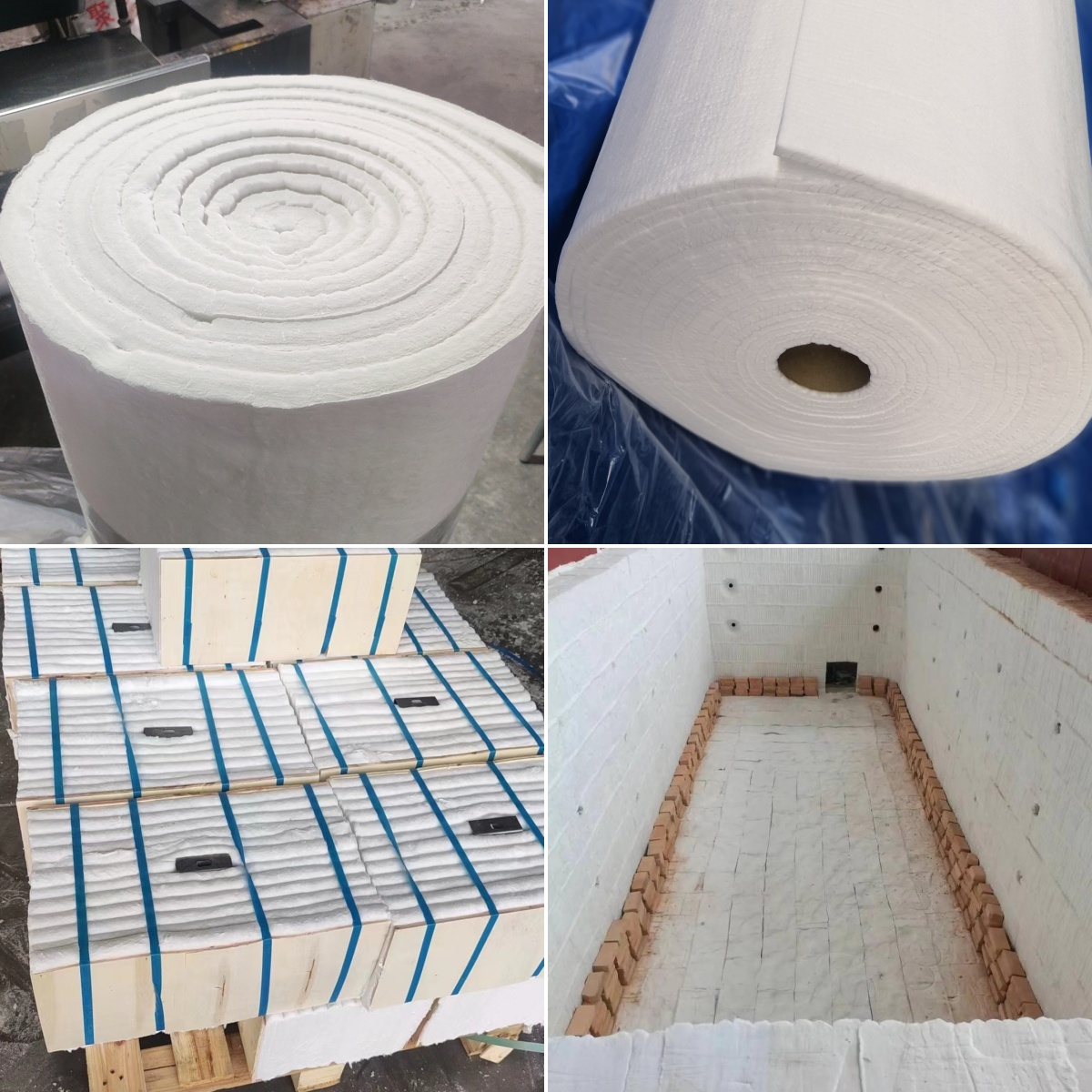
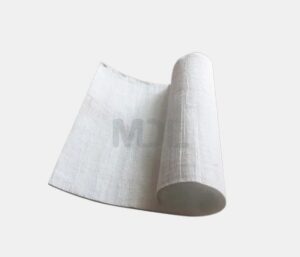
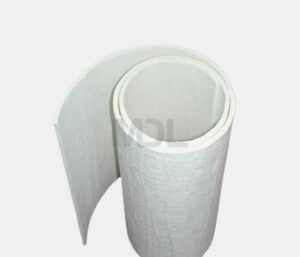
A bio soluble fiber blanket is a flexible insulation material produced from AES fibers through fiber forming and needling processes. Its interlocking fiber structure provides flexibility, strength and thermal insulation performance.
Unlike rigid insulation boards, the blanket can be cut, wrapped and installed around different equipment structures.
Zu den typischen Anwendungsbereichen gehören:
- Industrial furnace and kiln linings
- Heat treatment equipment
- Petrochemical processing equipment
- Boiler and industrial pipe insulation
- Expansion joint insulation
- Thermal insulation covers
- Furnace backup insulation
Bio soluble blankets are available in different thicknesses, densities, widths and roll lengths. Customized dimensions can be considered according to project requirements.
For buyers sourcing a bio soluble insulating blanket, important specifications include fiber grade, classification temperature, continuous-use temperature, density, thermal conductivity and linear shrinkage.
For applications requiring conventional refractory ceramic fiber materials, explore our Keramikfasermatte range.
3. Different Types of Bio Soluble Fiber Insulation Products
Bio soluble fiber can be processed into several product forms to meet different industrial insulation requirements.
| Product Type | Main Characteristics | Typische Anwendungsbereiche |
|---|---|---|
| Bio Soluble Fiber Blanket | Flexible, lightweight and easy to cut | Furnace walls, roofs and pipes |
| Bio Soluble Fiber Module | Prefabricated and compressed insulation unit | Industrial furnace linings |
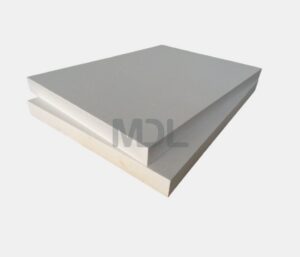
| Bio Soluble Fiber Board | Rigid structure with stable dimensions | Furnace linings and equipment insulation |
| Bio Soluble Fiber Bulk | Loose fiber for filling and customized components | Cavity filling and special insulation |
| Bio Soluble Fiber Paper | Thin and flexible insulation material | Sealing and thermal barriers |
Bio Soluble Insulation Module
A bio soluble insulation module is generally manufactured by folding or stacking AES fiber blanket, followed by compression and fixing to form a prefabricated insulation unit.
Compared with installing individual blanket layers, modular systems can simplify furnace lining construction and improve installation efficiency.
Module dimensions, compression, folding direction and anchoring arrangements should be selected according to furnace design and operating conditions.
Learn more about Keramikfasermodule for conventional ceramic fiber furnace lining applications.
Bio Soluble Fiber Bulk
Bio soluble fiber bulk is a loose fiber material without a fixed blanket or board structure. It is commonly used for filling irregular spaces, producing customized insulation components and applications requiring loose fiber materials.
Bei der Beschaffung von einem bio soluble fiber bulk factory, buyers should confirm fiber composition, temperature classification, packaging, technical specifications and applicable safety documentation.
4. Bio Soluble Fiber vs. Traditional Ceramic Fiber Blanket
Both bio soluble fiber blanket and traditional ceramic fiber blanket are used for high-temperature insulation. However, they differ in fiber composition and biological persistence characteristics.
| Vergleich | Bio Soluble Fiber Blanket | Traditional Ceramic Fiber Blanket |
|---|---|---|
| Fiber Type | Alkaline Earth Silicate (AES) | Refractory Ceramic Fiber (RCF) |
| Main Composition | Calcium and magnesium silicate-based | Aluminosilicate-based |
| Biopersistence | Lower under relevant testing conditions | Generally higher than AES fiber |
| Wärmedämmung | Gut | Gut |
| Structure | Flexible and lightweight | Flexible and lightweight |
| Anwendungen | Selected industrial insulation conditions | Industrial furnaces and high-temperature equipment |
The right material depends on operating temperature, chemical atmosphere, mechanical conditions, applicable regulations and product technical specifications.
AES products are not direct replacements for every RCF application. Buyers should evaluate the manufacturer’s temperature recommendations and compatibility with the actual operating environment.
You can also explore our Keramikfaserplatte for rigid insulation and furnace lining applications.
5. How to Select the Right Bio Soluble Fiber Insulation?
When purchasing a bio soluble fiber blanket or other AES insulation products, buyers should evaluate the following parameters:
| Auswahlkriterium | Zu bestätigende Informationen |
|---|---|
| Fiber Type | AES composition and product grade |
| Klassifizierungstemperatur | According to the manufacturer’s technical datasheet |
| Continuous Use Temperature | Based on actual operating conditions |
| Dichte | According to insulation design |
| Dicke | Based on required thermal performance |
| Width and Length | According to installation dimensions |
| Wärmeleitfähigkeit | At specified mean temperatures |
| Linear Shrinkage | Based on testing temperature and duration |
| Verpackung | Cartons, woven bags or pallets |
Different AES products have different classification temperatures. Some commercial grades are classified at 1000°C, 1100°C or 1200°C.
Classification temperature is not the same as recommended continuous-use temperature. Actual service limits depend on fiber composition, exposure time, furnace atmosphere and installation conditions.
Before requesting a quotation, buyers should provide the working temperature, equipment type, required dimensions, insulation thickness and estimated order quantity.
For broader furnace insulation requirements, visit our Isolierung von Industrieöfen Seite.
6. Why Choose Mindelun for Industrial Insulation Solutions?
Mindelun supplies industrial thermal insulation and refractory insulation materials for international distributors, contractors and industrial end users.
We support different project requirements through product selection, customized specifications and B2B procurement services.
Our supply capabilities include:
- Individuelle Spezifikationen: Different dimensions, densities and product configurations, subject to product availability.
- OEM- und ODM-Dienstleistungen: Customized packaging, product specifications and private-label solutions.
- Factory Supply: Produktionskoordination und Qualitätskontrolle für B2B-Aufträge.
- Multiple Insulation Products: Ceramic fiber blankets, boards, papers, modules and other industrial insulation materials.
- Flexible Beschaffung: Mixed-product orders and project-based purchasing arrangements.
- Exportunterstützung: Assistance with technical specifications, packaging and shipping arrangements.
Whether you are sourcing insulation materials for industrial furnaces, heat treatment equipment or other high-temperature applications, Mindelun can help evaluate your requirements and discuss suitable solutions.
Contact our team with your required product type, working temperature, dimensions, density and order quantity to discuss your project.
Häufig gestellte Fragen
1. What is a bio soluble insulating blanket made of?
It is generally made from alkaline earth silicate (AES) fibers, primarily based on calcium and magnesium silicate compositions.
2. Was ist der Unterschied zwischen bio soluble fiber and traditional ceramic fiber?
Bio soluble fiber generally refers to AES fiber, which has lower biopersistence under relevant testing conditions. Traditional refractory ceramic fiber is commonly aluminosilicate-based. Their composition and application requirements differ.
3. What is the temperature rating of bio soluble fiber blanket?
Classification temperatures vary by product grade. Commercial products may be available in different temperature classes, such as 1000°C, 1100°C or 1200°C. Actual continuous-use conditions should be confirmed through the manufacturer’s technical datasheet.
4. What is a bio soluble insulation module?
It is a prefabricated insulation unit generally made by folding or stacking AES fiber blanket and compressing it into a block for modular furnace lining installation.
5. What is bio soluble fiber bulk used for?
It is used for filling irregular spaces, producing customized insulation components and applications requiring loose fiber materials.
6. Can bio soluble fiber blanket be customized?
Depending on product availability, thickness, density, width, length and packaging can be customized according to project requirements.
7. Does bio soluble fiber require protective handling?
Yes. Although AES fiber is designed to have lower biopersistence under relevant testing conditions, fiber dust may still cause irritation. Follow the manufacturer’s SDS and applicable workplace safety requirements.
 German
 English
 Arabic
 French
 Spanish
 Portuguese
 Russian
 Indonesian