Ceramic Fiber Cloth vs. Ceramic Fiber Paper: Which Is Better for High-Temperature Sealing?
Choosing the right material is essential when manufacturing high-temperature gaskets for industrial furnaces, boilers, pipelines and thermal equipment. Ceramic fiber cloth and ceramic fiber paper are two commonly used materials for thermal insulation and sealing applications.
Although both materials offer high-temperature resistance, their structures, densities, flexibility and mechanical properties are different.
Ceramic fiber paper is generally a better choice for flat, static sealing applications requiring a smooth surface and good compression fit. Ceramic fiber cloth is more suitable for applications requiring flexibility, better handling strength, abrasion resistance or reinforced construction.
Understanding these differences helps buyers select the right high-temperature sealing material while balancing performance and procurement costs.
1. What Is the Difference Between Ceramic Fiber Cloth and Ceramic Fiber Paper?
The main difference comes from their manufacturing processes and fiber structures.
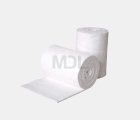
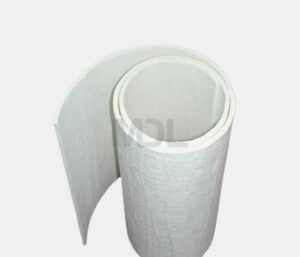
Ceramic Fiber Paper
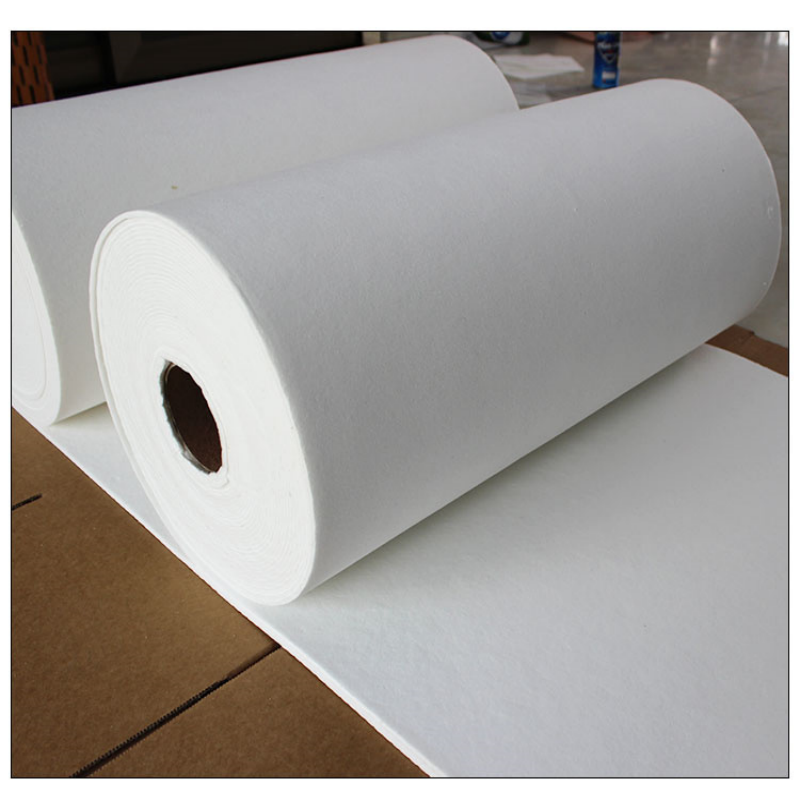
Ceramic fiber paper is manufactured through a wet-forming and vacuum-dewatering process. It has a relatively smooth and uniform surface, consistent thickness and good flexibility.
With typical densities around 200 kg/m³, ceramic fiber paper is lightweight and can be easily cut or die-cut into precise gasket shapes.
It is commonly used for:
- Flat sealing gaskets
- Furnace door insulation
- Flange insulation
- Thin thermal barriers
- Electrical appliance insulation
- Customized high-temperature sealing components
Explore our Ceramic Fiber Paper for more product information and customized insulation solutions.
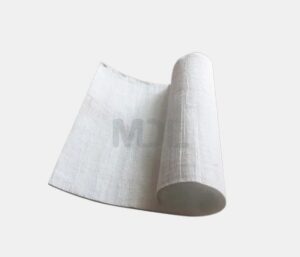
Ceramic Fiber Cloth
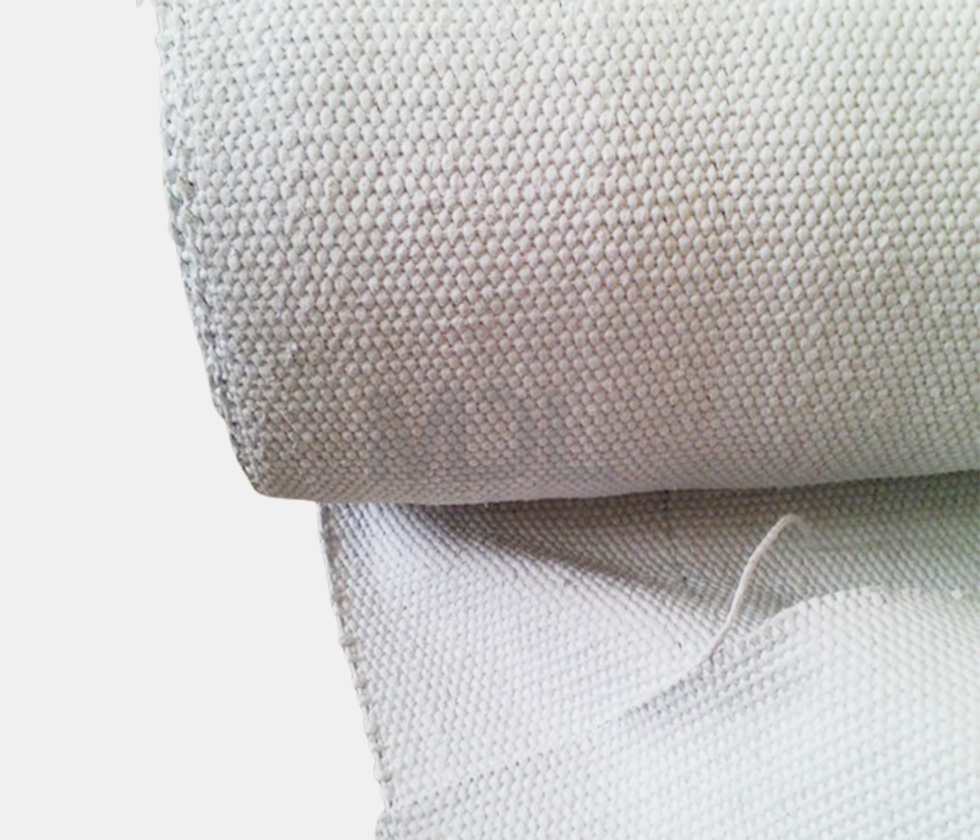
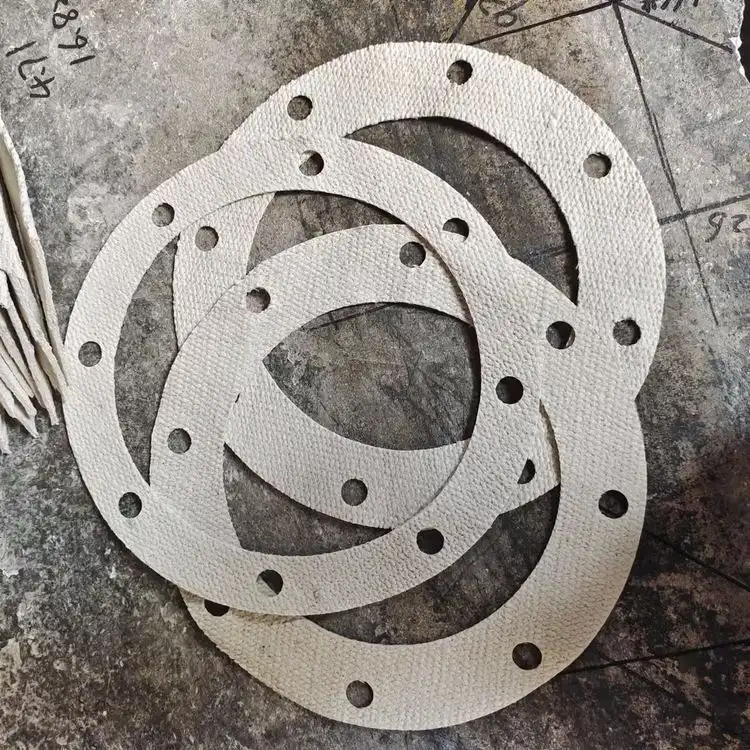
Ceramic fiber cloth is manufactured by weaving ceramic fiber yarns into a flexible textile structure. Its woven surface provides better handling strength and resistance to tearing compared with ordinary ceramic fiber paper.
Typical product densities can be around 500 kg/m³, depending on the fabric construction, thickness and reinforcement.
Ceramic fiber cloth can also be reinforced with fiberglass or stainless steel wire to improve its mechanical performance and suitability for demanding applications.
Common applications include:
- Flexible high-temperature gaskets
- Furnace door sealing
- Thermal equipment connections
- Expansion joints
- Removable insulation covers
- Industrial heat protection
For customized sealing components, explore our Ceramic Fiber Cloth Gaskets.
2. Ceramic Fiber Cloth vs. Ceramic Fiber Paper: Key Differences
The following table provides a general comparison. Actual specifications depend on product grade, density, thickness and construction.
| Comparison | Ceramic Fiber Paper | Ceramic Fiber Cloth |
|---|---|---|
| Manufacturing Process | Wet forming and vacuum dewatering | Woven ceramic fiber yarn |
| Typical Density | Around 200 kg/m³ | Around 500 kg/m³ |
| Surface | Smooth and relatively uniform | Woven or grid-like texture |
| Typical Thickness | Approximately 0.5–10 mm | Commonly around 2–5 mm |
| Flexibility | Flexible and easy to cut | Flexible textile structure |
| Edge Processing | Suitable for die-cutting and precise cutting | Cutting may cause fraying |
| Insulation | Lightweight insulation with good thermal performance | Depends on fabric construction and reinforcement |
| Tear Resistance | Relatively low | Generally better |
| Abrasion Resistance | Lower | Generally better |
| Repeated Handling | Less suitable for repeated mechanical handling | More suitable for repeated handling |
| Relative Cost | Often more economical | Generally higher for comparable applications |
Important: Density and thermal conductivity should be compared under the same test conditions. A higher density does not automatically mean better sealing performance or lower thermal conductivity.
3. Which Material Is Better for High-Temperature Gaskets?
The best material depends on the sealing conditions rather than temperature alone.
Ceramic Fiber Paper: Better for Flat and Static Sealing
Ceramic fiber paper is often preferred when the gasket requires a smooth surface, accurate dimensions and good contact with mating surfaces.
Its relatively uniform structure helps the material fit flat sealing surfaces when properly compressed.
Main advantages include:
- Smooth surface and uniform thickness
- Easy die-cutting into customized shapes
- Good thermal insulation
- Suitable for thin gasket applications
- Lower material cost in many standard specifications
Typical applications include furnace door insulation, flat flange insulation, electrical appliances and other static thermal sealing positions.
For applications requiring thin insulation components, ceramic fiber paper can be supplied in different thicknesses according to the required design.
Ceramic Fiber Cloth: Better for Mechanical and Flexible Applications
Ceramic fiber cloth is a better option when the gasket needs to withstand more handling, friction, vibration or repeated installation.
Its woven structure provides better resistance to tearing and handling damage than ordinary ceramic fiber paper.
Main advantages include:
- Better handling strength
- Improved resistance to tearing and abrasion
- Flexible textile construction
- Fiberglass or stainless steel wire reinforcement options
- Suitable for flexible connections and customized sealing components
Typical applications include industrial furnace doors, removable insulation covers, flexible connections and equipment requiring reinforced sealing materials.
For more demanding applications, reinforced ceramic fiber cloth can be considered according to the operating temperature and mechanical requirements.
4. Fiberglass vs. Stainless Steel Reinforced Ceramic Fiber Cloth
Reinforcement is an important factor when selecting ceramic fiber cloth for high-temperature sealing.
Mindelun offers different reinforcement options for different operating conditions.
| Reinforcement Type | Continuous Working Temperature | Main Characteristics |
|---|---|---|
| Fiberglass Reinforced | Up to 650°C | Improved handling strength for general high-temperature applications |
| Stainless Steel Wire Reinforced | Up to 1000°C | Better mechanical support for higher-temperature applications |
These temperatures refer to the previously specified continuous working temperatures of the reinforced cloth products, not universal ratings for all finished gaskets.
Actual service limits depend on the reinforcement material, installation conditions, sealing pressure and operating environment.
5. How to Choose the Right High-Temperature Sealing Material?
The following recommendations can help industrial buyers select a suitable material.
1. Static Sealing and Flat Insulation
Choose ceramic fiber paper when the application mainly requires thermal insulation, a smooth contact surface and accurate die-cut gasket dimensions.
2. Repeated Installation or Mechanical Handling
Choose ceramic fiber cloth when the gasket needs better tear resistance, abrasion resistance or repeated handling.
3. Thin Gasket Requirements
Ceramic fiber paper is available in thin specifications, including approximately 0.5 mm, making it suitable for compact spaces and precision insulation components.
4. Reinforced Gasket Requirements
Consider fiberglass-reinforced or stainless steel wire-reinforced ceramic fiber cloth when additional mechanical support is required.
5. Higher Sealing Pressure
For pressurized flange or equipment connections, do not select materials based on temperature resistance alone. Check compression, recovery, sealing pressure, gasket construction and compatibility with the working medium. A reinforced textile or specially designed gasket may be more appropriate.
6. Ceramic Fiber Cloth Gasket vs. Ceramic Fiber Paper Gasket
For gasket manufacturers and industrial equipment buyers, the choice is not simply between cloth and paper. The finished gasket design is equally important.
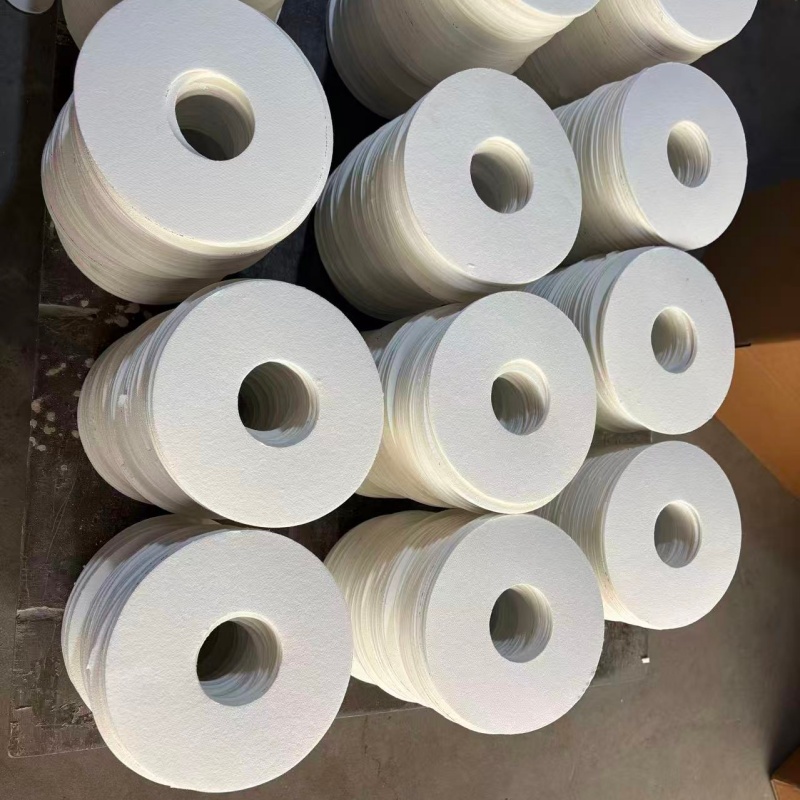
Ceramic fiber paper gaskets are suitable for flat, static sealing positions where precise cutting and surface contact are important.
Ceramic fiber cloth gaskets are more suitable for flexible sealing positions where mechanical handling, abrasion resistance or reinforcement is required.
Both materials can be processed into customized gasket components according to drawings, samples or equipment dimensions.
Mindelun supports customized ceramic fiber gasket production, including different thicknesses, dimensions and shapes for industrial applications.
Explore our custom ceramic fiber cloth gaskets for reinforced and flexible sealing solutions.
7. Important Factors When Purchasing Ceramic Fiber Gaskets
When sourcing ceramic fiber paper or cloth gaskets, buyers should consider more than the nominal temperature rating.
The following parameters are important:
- Bulk Density: Affects material weight, structure and insulation performance.
- Thickness: Must match the gasket design and available compression space.
- Compression and Recovery: Important for maintaining sealing performance during operation.
- Permanent Linear Change: Helps evaluate dimensional stability after high-temperature exposure.
- Reinforcement Type: Determines the mechanical characteristics and temperature limitations of reinforced cloth.
- Working Temperature: Should be selected according to the actual continuous operating conditions.
- Gasket Dimensions: Inner diameter, outer diameter, thickness and bolt-hole positions should be confirmed before production.
For bulk purchasing, we recommend confirming the technical specifications and testing requirements before placing an order.
8. Custom Ceramic Fiber Gasket Manufacturer – Mindelun
Mindelun supplies ceramic fiber paper, ceramic fiber cloth and customized ceramic fiber gasket components for industrial thermal insulation and high-temperature sealing applications.
Our customization services include:
- Ceramic fiber paper die-cutting
- Ceramic fiber cloth gasket fabrication
- Round, square and rectangular gasket shapes
- Customized inner and outer diameters
- Different thicknesses and dimensions
- Fiberglass and stainless steel wire reinforced options
- OEM and ODM production
Whether you need standard insulation materials or customized sealing components, our team can recommend suitable products according to your drawings, samples and operating conditions.
For complete industrial insulation requirements, you can also explore our Ceramic Fiber Board and Industrial Furnace Insulation solutions.
Frequently Asked Questions
1. Is ceramic fiber paper better than ceramic fiber cloth for gaskets?
Ceramic fiber paper is generally more suitable for flat, static gaskets requiring a smooth surface and precise cutting. Ceramic fiber cloth is more suitable for applications requiring better tear resistance, abrasion resistance or reinforced construction.
2. What is the typical density of ceramic fiber paper and cloth?
Ceramic fiber paper commonly has a density around 200 kg/m³, while ceramic fiber cloth can have a density around 500 kg/m³. Actual values vary according to product specifications and construction.
3. Can ceramic fiber paper be used for high-temperature sealing?
Yes. Ceramic fiber paper is widely used for high-temperature insulation and static sealing. The suitable operating temperature depends on its material grade, binder system and actual service conditions.
4. What is the continuous working temperature of reinforced ceramic fiber cloth?
Based on our product specifications, fiberglass-reinforced ceramic fiber cloth can be used continuously up to 650°C, while stainless steel wire-reinforced ceramic fiber cloth can be used continuously up to 1000°C under suitable conditions.
5. Does ceramic fiber cloth produce smoke during initial heating?
Some ceramic fiber cloth products contain organic binders or carrier materials that may release smoke during initial heating. If low-smoke performance is important, ask the manufacturer about binder content, pre-treatment and high-temperature pre-fired options before purchasing.
6. Can Mindelun manufacture customized ceramic fiber gaskets?
Yes. Mindelun can manufacture ceramic fiber paper and cloth gaskets according to customer drawings, samples, dimensions and application requirements.
Contact Mindelun for High-Temperature Sealing Solutions
Looking for a reliable ceramic fiber gasket manufacturer and supplier?
Send us your required material, thickness, dimensions, working temperature and quantity. Our team will help you select suitable ceramic fiber paper or ceramic fiber cloth for your sealing application.
Contact Mindelun for technical support, samples and bulk quotations.
 English
 Arabic
 French
 German
 Spanish
 Portuguese
 Russian
 Indonesian