
How to Choose the Right Rock Wool Board for Roofing Insulation?
Choosing the right rock wool board for roofing insulation is essential for improving building energy efficiency, fire safety, and acoustic comfort. For industrial factories, steel-structure warehouses, and commercial buildings, the ideal roofing insulation board must provide suitable thermal conductivity, compressive strength, and dimensional stability.
Different roofing systems require different insulation specifications. This guide explains how to select the right rock wool board based on roof type, technical parameters, application requirements, and project budget.
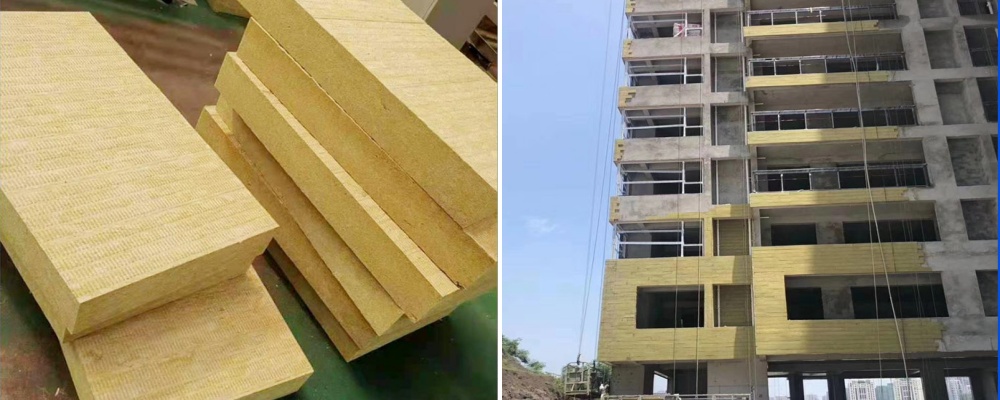
1. Choose Rock Wool Board According to the Roof Type
Flat Roof Insulation
Flat roofs in industrial plants, warehouses, and commercial buildings require insulation materials that meet the thermal and mechanical requirements of the complete roofing system.
Key selection factors:
- Density: approximately 120–180 kg/m³, depending on the application
- Compressive strength: typically evaluated against design loads; 40–80 kPa may be an initial reference for certain applications
- Thermal conductivity: ≤0.040 W/(m·K) as a preliminary target
- Water resistance: suitable for the specified roof construction and moisture conditions
Benefits of rock wool board for flat roofs:
- Helps reduce heat transfer through the roof
- Provides fire-resistant insulation when the product meets the required classification
- Supports dimensional stability under specified service conditions
- Improves acoustic comfort in industrial and commercial buildings
Metal Roof Insulation
Metal roofing is widely used in steel-structure factories, logistics centers, and industrial warehouses. Rock wool board for metal roof insulation helps reduce heat transfer and absorb sound from rain and industrial equipment.
Key selection factors:
- Density: approximately 80–140 kg/m³ for some systems
- Suitable mechanical strength and resilience
- Appropriate thickness and thermal conductivity
- Compatibility with the roof panels, supporting structure, and installation method
Benefits:
- Improves thermal insulation in steel buildings
- Helps reduce rain and equipment noise
- Provides non-combustible insulation options when properly certified
- Supports efficient installation in industrial roofing systems
For projects with specific structural loads or fire safety requirements, confirm the product specification against the roof system design.
Inverted Roof Insulation
In an inverted roof, the waterproofing membrane is positioned beneath the insulation layer. The insulation is therefore exposed to different moisture and loading conditions than in a conventional roof.
Standard rock wool boards should not automatically be specified for inverted roofs. Select an insulation material that has been verified as suitable for the intended construction, including moisture exposure, drainage, compressive loads, and compatibility with the waterproofing system.
2. Key Technical Parameters of Roofing Rock Wool Board
When comparing rock wool insulation boards for roofing, evaluate the following technical parameters.
| Parameter | Selection Guidance | Importance |
|---|---|---|
| Density | Common options range from approximately 80–180 kg/m³, depending on the product | Influences weight and mechanical characteristics |
| Thermal Conductivity | ≤0.040 W/(m·K) can be a preliminary target | Lower values generally improve insulation at the same thickness |
| Compressive Strength | Specify according to roof loads and system design | Helps control deformation under loading |
| Fire Performance | Confirm the required classification and test reports | Supports compliance with applicable fire regulations |
| Water Absorption | Check the tested value against project requirements | Helps assess moisture-related performance |
| Water Repellency | Verify the manufacturer’s test results | Indicates resistance to water penetration under specified test conditions |
| Dimensional Stability | Review the product’s technical data | Helps maintain the integrity of the insulation layer |
These values are preliminary selection references, not universal standards. Actual requirements depend on local building codes, product testing, roof design, and installation conditions.
3. Recommended Rock Wool Roofing Solutions for Different Applications
Industrial Buildings and Warehouses
For factories, workshops, and logistics centers, industrial roof insulation boards should balance thermal performance, fire safety, and mechanical strength.
Consider:
- Suitable density and tested compressive strength
- Low thermal conductivity
- Verified fire performance
- Appropriate board thickness and dimensions
- Stable performance under expected service conditions
Commercial Buildings
For offices, shopping centers, and commercial facilities, commercial roof insulation materials should support energy efficiency, acoustic comfort, and building fire safety.
Key considerations include:
- Compliance with local building codes
- Thermal insulation performance
- Sound absorption where required
- Compatibility with roofing and waterproofing components
- Long-term dimensional stability
Data Centers and Energy Storage Facilities
Data centers and energy storage buildings require careful coordination between roof insulation and the overall fire protection strategy.
Recommended considerations include:
- Verified non-combustible performance where required
- Suitable thermal conductivity
- Dimensional stability
- Compatibility with the specified fire protection system
- Compliance with project-specific building and safety requirements
The complete roof assembly should be evaluated rather than relying on the insulation material alone to determine fire safety.
4. How to Evaluate Rock Wool Board Quality
Choosing a reliable rock wool board manufacturer and supplier helps ensure consistent product quality and dependable project performance.
Before purchasing, check the following:
- Fire performance: Request applicable fire classification certificates and test reports.
- Thermal conductivity: Confirm tested values at the relevant mean temperature.
- Compressive strength: Ensure the tested performance meets project requirements.
- Density consistency: Review product specifications and quality control records.
- Surface quality: Check for cracks, uneven surfaces, and excessive fiber shedding.
- Water resistance: Review water absorption and water repellency test results separately.
- Technical documentation: Request technical data sheets, inspection reports, and relevant certifications.
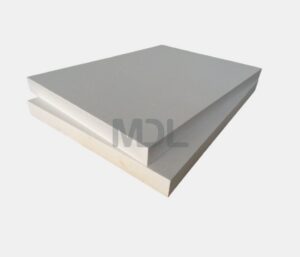
Explore our Rock Wool Board range for building insulation applications. You can also visit our Building Wall and Roof Insulation page to learn more about insulation solutions for different building structures.
5. Rock Wool Board vs. Other Roofing Insulation Materials
Different roofing insulation materials offer different combinations of thermal performance, fire behavior, compressive strength, and sound absorption.
| Material | Thermal Insulation | Fire Performance | Compressive Strength | Sound Absorption | Typical Applications |
|---|---|---|---|---|---|
| Rock Wool Board | Good | Excellent when certified as required | Varies by grade | Good | Industrial and commercial roofs |
| Glass Wool | Good | Generally good; verify product classification | Varies by product | Good | Lightweight roofing and acoustic insulation |
| XPS Board | Very good | Combustible; verify system requirements | Often high | Generally limited | Roofs and floors where suitable |
| PUR/PIR Board | Very good | Depends on formulation, facing, and roof assembly | Varies by product | Generally limited | Energy-efficient roofing and industrial buildings |
Note: Actual performance depends on product specifications, thickness, facing, installation, and the complete roof assembly. Compare tested product data and applicable fire classifications rather than relying on general material ratings.
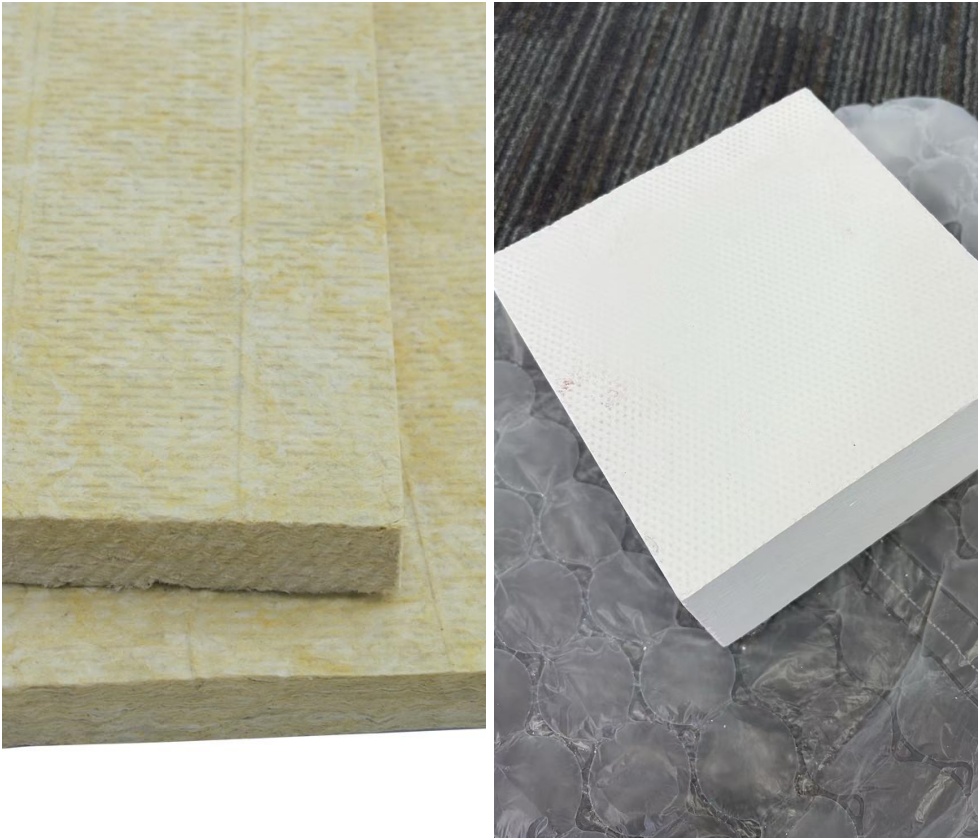
6. Buying Recommendations for Roofing Rock Wool Board
For industrial buildings and steel-structure roofing systems, a rock wool board with a density of approximately 120–150 kg/m³ may be a useful starting point for evaluation.
Consider these preliminary selection targets:
- Density: 120–150 kg/m³, subject to roof design
- Thermal Conductivity: ≤0.040 W/(m·K), where achievable by the selected product
- Fire Performance: Meets the required classification under applicable standards
- Compressive Strength: Determined by the roof’s design loads; 40–80 kPa may be a preliminary reference for certain applications
- Water Resistance: Meets the specified test requirements for the intended roof system
For maintenance-access roofs, equipment roofs, or other areas subject to higher loads, consider a suitable high-density rock wool board for roofing insulation. Products with densities of 150–180 kg/m³ or higher may be appropriate for some applications, but density alone does not determine load-bearing performance. Confirm the tested compressive strength and the requirements of the complete roof assembly.
When requesting a quotation from a rock wool board supplier, provide the following information:
- Application: flat roof, metal roof, or another roofing system
- Required thickness and board dimensions
- Target density and compressive strength
- Thermal conductivity requirements
- Required fire classification
- Estimated quantity and delivery destination
These details help the manufacturer recommend an appropriate specification and prepare a more accurate quotation.
Conclusion
Choosing the right rock wool board for roofing insulation requires balancing thermal performance, fire safety, mechanical strength, moisture resistance, and project cost. The highest-density board is not always the most suitable option; the best choice depends on the roof structure, loading conditions, and applicable building standards.
For industrial and commercial roofing projects, selecting insulation that matches the system design helps improve energy efficiency and long-term reliability.
Looking for a reliable rock wool board supplier? Contact Mindelun to discuss your roofing insulation requirements, request technical data, and obtain a quotation. Custom specifications and OEM/ODM options can be discussed according to product availability and project needs.
 English
 Arabic
 French
 German
 Spanish
 Portuguese
 Russian
 Indonesian