How to Choose the Right Carbon Fiber Reinforced Calcium Silicate Board for Fire Barrier Applications
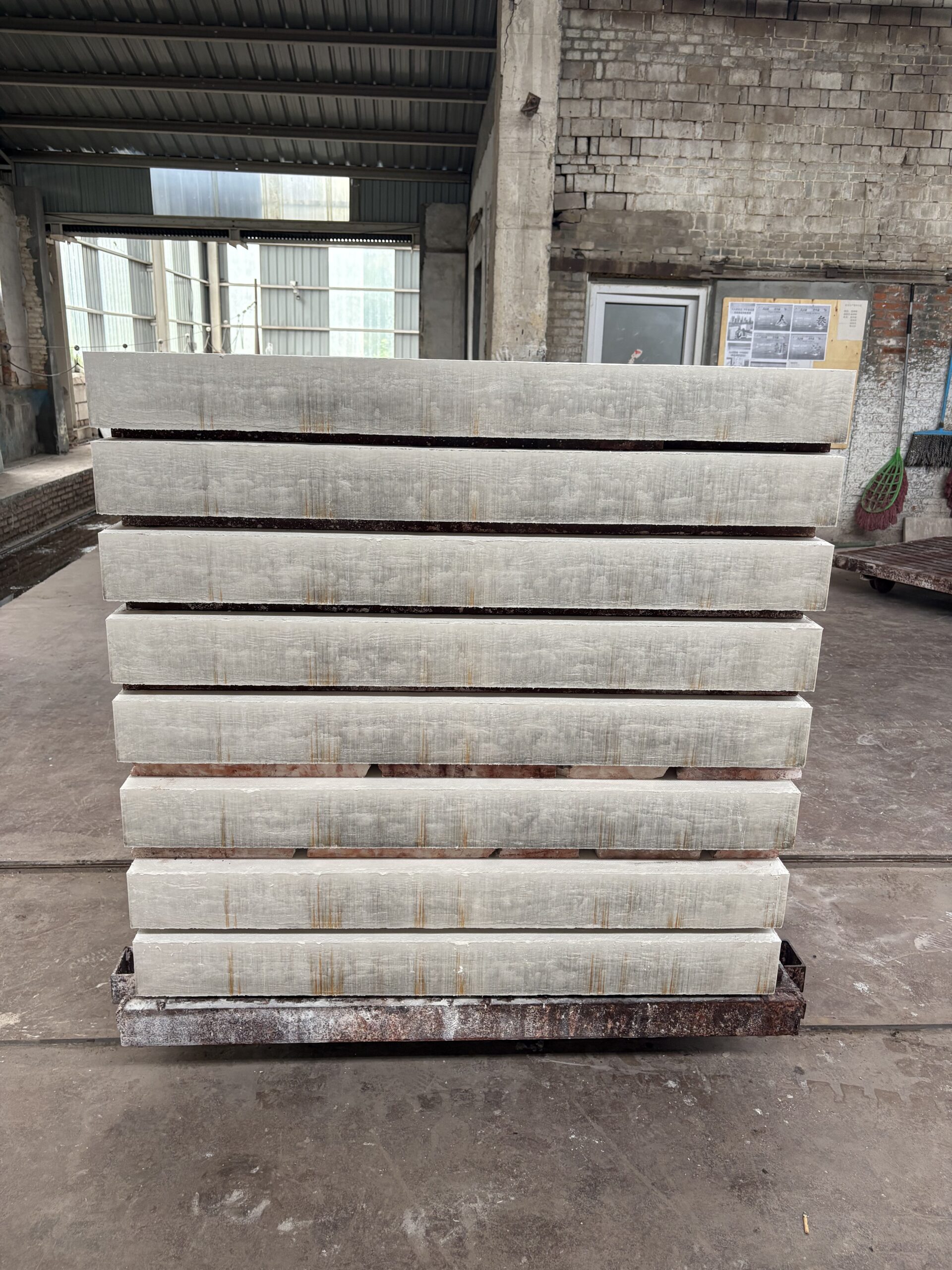
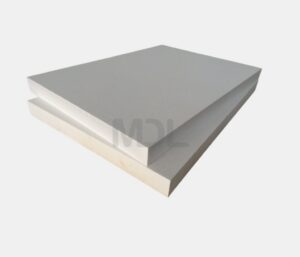
Carbon fiber reinforced calcium silicate board is widely used in industrial fire barriers, equipment protection, and thermal insulation systems. However, choosing the right board requires more than selecting a standard thickness or density.
To ensure reliable performance and cost-effective procurement, buyers should consider four key factors: operating temperature, installation location, required density, and customized processing requirements.
1. Confirm the Operating Temperature
The first step is to identify the actual working temperature of the application.
Different fire barrier and industrial insulation systems have different temperature requirements. The selected carbon fiber reinforced calcium silicate board must provide suitable thermal resistance under the expected operating conditions.
Before requesting a quotation, buyers should clarify:
- Normal operating temperature
- Maximale Betriebstemperatur
- Whether the board is exposed to direct heat
- Whether it is used as a primary or secondary insulation layer
This information helps manufacturers recommend a suitable product specification.
2. Identify the Installation Location
The installation position directly affects the required mechanical strength, thermal insulation performance, and board structure.
Carbon fiber reinforced calcium silicate boards are commonly considered for:
- Industrial fire barrier systems
- Furnace and equipment insulation
- Thermal protection panels
- Industrial partition walls
- Customized fire-resistant components
For applications requiring higher mechanical strength and rigidity, buyers may also consider high-density calcium silicate boards.
Different installation conditions require different material specifications. Providing application details or drawings allows manufacturers to evaluate the most suitable solution.
3. Select the Appropriate Board Density
Density is another important factor when choosing carbon fiber reinforced calcium silicate board.
Higher-density boards generally provide greater rigidity and mechanical strength, while lower-density boards may offer weight advantages and different thermal insulation characteristics.
The ideal density depends on:
- Installation conditions
- Mechanical load requirements
- Betriebstemperatur
- Required strength and rigidity
- Overall project budget
Rather than automatically choosing the highest density, buyers should select a specification that balances mechanical performance, thermal insulation, and project cost.
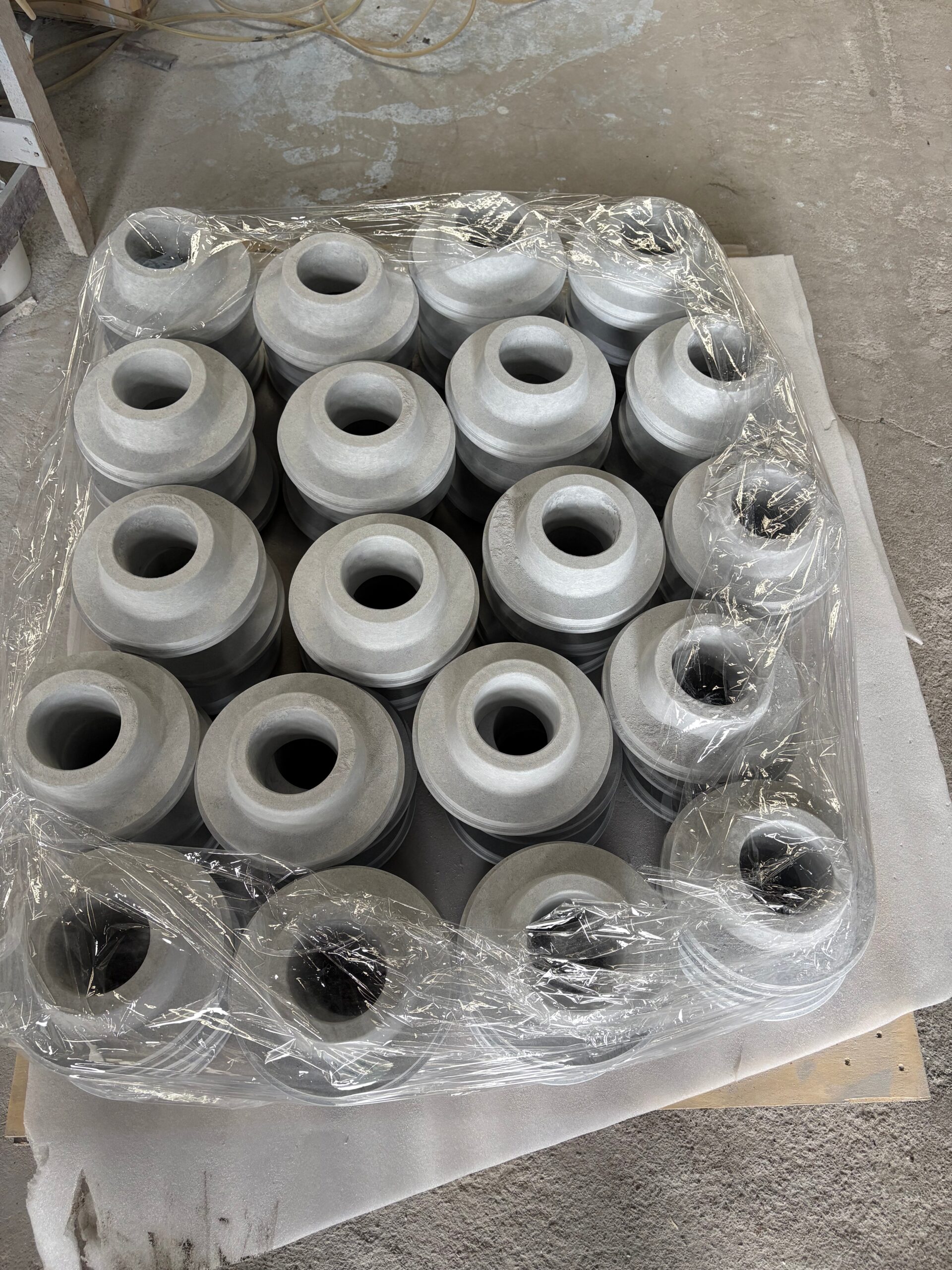
You can also explore Mindelun’s high-density carbon fiber reinforced calcium silicate board for product specifications and customized options.
4. Confirm Dimensions and Drawings Before Quotation
Standard boards and customized components may involve different production processes and costs.
Before requesting a quotation, buyers should confirm:
- Board length and width
- Erforderliche Dicke
- Erforderliche Dichte
- Total order quantity
- Special shapes or cut-out requirements
- Technical drawings, if available
For standard rectangular boards, conventional cutting may be sufficient.
However, if the project requires irregular shapes, grooves, holes, curved edges, or precision dimensions, mold-based processing or CNC machining may be necessary.
Manufacturers need to review the drawings to determine:
- Whether a customized mold or template is required
- Whether CNC cutting is sufficient
- Tooling and processing costs
- Production feasibility and dimensional tolerances
Providing complete technical drawings helps manufacturers evaluate the manufacturing process and prepare a more accurate quotation.
5. Consider Relevant Fire Testing Standards
For fire barrier applications, buyers should also check the project’s fire safety requirements.
Depending on the application, relevant testing standards may include:
- ASTM E84: Standard Test Method for Surface Burning Characteristics of Building Materials.
- ASTM E136: Standard Test Method for Assessing Combustibility of Materials Using a Vertical Tube Furnace at 750°C.
These standards evaluate different fire-related characteristics. They are not interchangeable, and the required test method should be confirmed according to the project specifications.
Please note that the performance of an individual board does not automatically establish the fire resistance rating of a complete wall or barrier assembly.
6. Why Choose Mindelun for Customized Calcium Silicate Boards?
Choosing an experienced manufacturer helps buyers select suitable materials and avoid unnecessary costs caused by incorrect specifications.
Mindelun provides carbon fiber reinforced calcium silicate boards for industrial insulation and fire barrier applications, with customized manufacturing options including:
- Customized density and thickness
- Different board dimensions
- Special-shaped components
- Drawing-based cutting and machining
- OEM and ODM manufacturing support
For other industrial high-temperature insulation requirements, explore our Isolierungslösungen für Industrieöfen.
Our team can review your application requirements and technical drawings to recommend a suitable product and processing method before quotation.
What Information Should You Provide for a Quotation?
To receive an accurate quotation for carbon fiber reinforced calcium silicate board, please provide the following information:
| Required Information | Details |
|---|---|
| Anwendung | Fire barrier, furnace insulation, or other applications |
| Betriebstemperatur | Normal and maximum operating temperatures |
| Installation Location | Specific equipment or installation position |
| Dichte | Required density in kg/m³ |
| Abmessungen | Length, width, and thickness |
| Anzahl | Required quantity |
| Technical Drawings | Drawings for special-shaped or customized products |
The more detailed your requirements are, the more accurately we can evaluate the production process, tooling requirements, and final product cost.
Kontaktieren Sie Mindelun today for customized carbon fiber reinforced calcium silicate board solutions. Let our team help you select the right material and processing method for your project.
 German
 English
 Arabic
 French
 Spanish
 Portuguese
 Russian
 Indonesian